Article: Your CPAP Mask Shouldn’t Be the Hardest Part: The Ultimate Comfort + Leak‑Fix Guide
Your CPAP Mask Shouldn’t Be the Hardest Part: The Ultimate Comfort + Leak‑Fix Guide
USCPAP.com (A Division of USA Medical Supply)
Your CPAP Mask Shouldn’t Be the Hardest Part: The Ultimate Comfort + Leak‑Fix Guide
By the USCPAP Team • Updated for everyday CPAP users who want fewer leaks, less soreness, and better sleep.
Quick truth: If CPAP therapy feels tough, it’s often not the pressure—it’s the mask. A mask that pinches, leaks, rubs, or wakes you up can make even the best machine feel impossible.
Hi friend,
If you’ve ever thought, “I can do the machine… but I can’t do this mask,” you are not alone. The good news is that most mask problems are fixable—usually with small adjustments, the right cushion size, and (sometimes) replacing a part that’s quietly worn out.
Start Here: 3 Common CPAP Mask Complaints (and what usually helps)
“My nose / nostrils get sore and I can’t fall asleep.”
✅ Try the next cushion/pillow size up (too small can dig in).
✅ Reduce “over‑tightening” (many cushions seal better when they inflate gently).
✅ Re-seat the cushion: lift mask slightly off your face, then set it back down evenly.
✅ Add comfort protection: mask liner or a mask-safe barrier where friction happens.
✅ If dryness is part of the pain: adjust humidity and consider heated tubing for consistent moisture.
“My mask leaks when I sleep on my side.”
✅ Consider a top‑of‑head hose connection (it moves with you better than front-hose designs).
✅ Use a CPAP-friendly pillow or adjust your pillow so it doesn’t push the cushion sideways.
✅ Manage hose drag: route tubing up and over the headboard, or let it lie on your chest under a blanket.
✅ Check cushion wear: leaks that “suddenly started” are often an oil/cleaning issue or a worn cushion.
“It feels okay at bedtime… then it wakes me up later.”
✅ Do a fit check while lying down (your face and jaw position changes).
✅ Make sure your cushion isn’t compressed or shiny (a sign it’s aging and losing seal).
✅ Check humidity/rainout: condensation can break the seal and feel “sudden.”
✅ If you’re tempted to crank pressure: pause—comfort settings (ramp/EPR/humidity) often solve it without higher pressure.
Table of Contents
- CPAP Mask Types (Full Face vs Nasal vs Nasal Pillow vs Hybrid)
- How to Choose the Right Mask for How You Sleep
- The 10‑Minute Fit Routine (Do this before you give up)
- Leak Troubleshooting: What Your Leak Pattern Is Trying to Tell You
- Pain, Pressure Marks, and Skin Irritation (Fixes that actually help)
- Dry Nose, Dry Mouth, and Congestion
- Rainout (Water in the Hose/Mask) and How to Stop It
- Mouth Leaks & Chinstrap Questions
- Cleaning + Replacement Schedules (so your mask keeps sealing)
- Safety Notes (Magnets, implants, and when to call your clinician)
- Shop by Category + Our Support
- FAQ
- Sources & Further Reading (Bibliography)
1) CPAP Mask Types (Full Face vs Nasal vs Nasal Pillow vs Hybrid)
There is no single “best” CPAP mask—only the best match for your breathing, your face, and your sleep style. Here’s a practical breakdown (with shopping links so you can compare quickly):
Full Face Masks (nose + mouth)
Best for many mouth breathers, people who wake up congested, or anyone who can’t reliably breathe through their nose all night.
✅ Pros: handles mouth breathing; helpful during allergies/colds; stable for some active sleepers.
⚠️ Watch-outs: can feel bulky; can leak if the cushion gets pushed by your pillow; may take a little more fitting.
Nasal Masks (covers the nose)
Great if you breathe through your nose and want a balance between minimal feel and stable seal.
✅ Pros: less bulky than full face; often comfortable for side sleepers; good for higher pressures for many users.
⚠️ Watch-outs: if your mouth falls open at night, you may get dry mouth or therapy leaks.
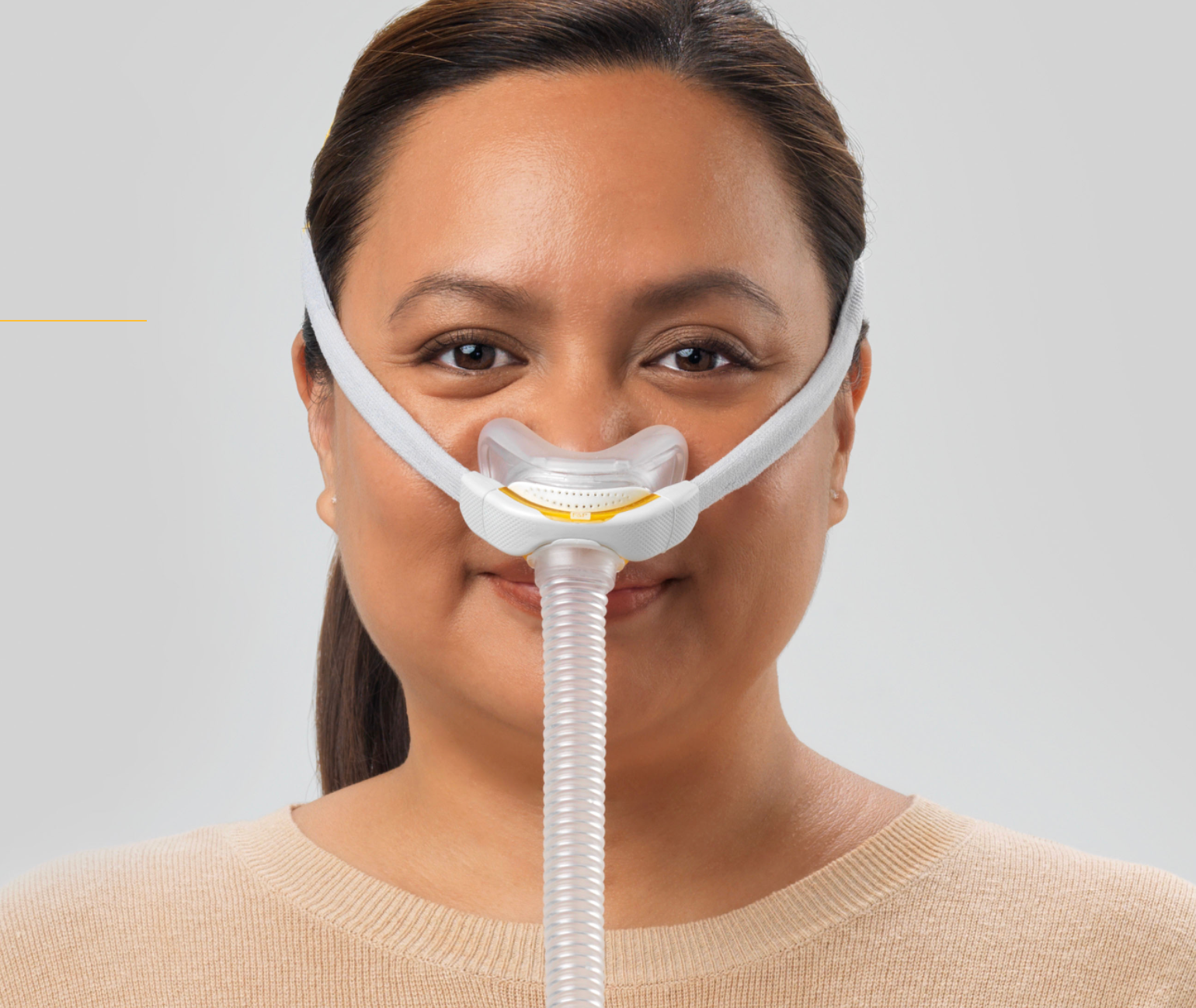
Nasal Pillow Masks (minimal contact at nostrils)
A favorite for people who feel claustrophobic or want the lightest possible setup.
✅ Pros: minimal face contact; easier for glasses/readers; often great for stomach/side sleepers.
⚠️ Watch-outs: wrong pillow size can cause nostril soreness; dryness can feel more intense without humidity.
Hybrid / Under‑the‑Nose Full Face Styles (mouth + under‑nose seal)
A “best of both worlds” option for many people: mouth coverage without pressure on the bridge of the nose.
✅ Pros: avoids nose-bridge soreness; can feel less bulky than classic full face masks.
⚠️ Watch-outs: sizing under the nose matters; cushion alignment is key for preventing eye leaks.
Not sure where to start? Consider a complete kit or “fit pack” style option that includes sizing flexibility. Shop CPAP Mask Kits →
2) How to Choose the Right Mask for How You Sleep
Instead of guessing, answer these questions (and follow the matching recommendation):
A simple “mask match” checklist
1) Do you breathe through your mouth at night?
✅ Rarely / no → Nasal or Nasal Pillow may feel easier.
2) How do you sleep most nights?
✅ Side sleeper → look for stable cushions and consider top-of-head hose options (many find them easier).
✅ Stomach sleeper → nasal pillows or minimal contact masks tend to get pushed less by pillows.
✅ Back sleeper → most styles can work; focus on comfort and consistent seal.
3) What do you dislike most about masks?
✅ “Feels bulky / claustrophobic” → start with Nasal Pillow or lighter Nasal.
✅ “Hurts my nose bridge” → avoid classic nose-bridge contact; try Hybrid or under‑nose designs.
✅ “Leaks when I move” → check cushion size, headgear fit, and consider a different frame style.
4) Do you have frequent nasal congestion?
✅ Yes → full face/hybrid can prevent “I can’t breathe” nights (especially during allergies/colds).
✅ No → nasal or pillows can be very comfortable.
Still unsure? Start with the category that fits your breathing, then fine-tune with cushion sizing and comfort settings.
3) The 10‑Minute Fit Routine (Do this before you give up)
If a mask is uncomfortable or leaky, don’t immediately tighten everything and hope for the best. Instead, use this routine once—and you’ll usually learn what the real problem is.
Step-by-step
Step 1: Start with a clean cushion.
✅ Facial oils can break the seal. If your cushion is slippery, wash it with mild soap and warm water, rinse well, air dry.
Step 2: Reset your straps.
✅ Loosen straps so the mask can sit naturally (especially if you’ve been “chasing leaks” by tightening).
✅ Align the cushion evenly before tightening anything.
Step 3: Turn on airflow first, then fit.
✅ Many masks seal best when the cushion inflates slightly.
✅ If your machine has a “Mask Fit” feature, use it.
Step 4: Tighten in small, even adjustments.
✅ Tighten left and right sides evenly.
✅ Aim for “secure and comfortable,” not “as tight as possible.”
Step 5: Lie down in your real sleep position.
✅ Your jaw and cheeks shift when you recline—your bedtime fit may not match your sleep fit.
Step 6: Do a quick leak-mapping test.
✅ Move your head side-to-side.
✅ Roll to your usual side-sleep position.
✅ If leaks appear, note where they start (eyes? corners of mouth? under nose?). That “where” tells you what to change.
Step 7: Check for worn parts.
✅ If you used to seal easily and now you don’t, your cushion or headgear may be due for replacement.
✅ Cushions/pillows are the #1 part that causes new leaks over time.
Need a fresh cushion or new headgear? Shop: Replacement Cushions • Headgear
4) Leak Troubleshooting: What Your Leak Pattern Is Trying to Tell You
Leaks aren’t just annoying—big leaks can reduce effective therapy and wake you (or your partner) up. Here’s how to decode the most common leak patterns and what usually fixes them.
A) Leaks blowing into your eyes (common with nasal and under‑nose seals)
✅ Re-seat the cushion (lift slightly, set back down evenly).
✅ Try a different cushion size—eye leaks are often a sizing/height mismatch.
✅ Check upper strap tension: too tight can buckle the cushion upward and push air toward eyes.
✅ If your pillow pushes the mask, switch to a side-sleeper CPAP pillow or move your face closer to the pillow edge.
B) Leaks at the corners of the mouth (full face / hybrid)
✅ Don’t overtighten—this can create “channels” that leak more.
✅ Make sure the cushion sits in the natural crease, not riding too low or too high.
✅ If you have facial hair, consider a different cushion style or use a liner to improve seal consistency.
✅ Check that the cushion is clean; oils can cause corner leaks quickly.
C) Leaks that start only when you turn onto your side
✅ The pillow is likely pushing the mask: use a CPAP cutout pillow or change pillow height/firmness.
✅ Try a top-of-head hose design, or manage hose routing so tubing doesn’t tug when you roll.
✅ Consider a softer cushion material or different frame size (some masks come in multiple frame sizes).
D) Whistling / squealing sounds
✅ Inspect the cushion edge for tiny folds or “rolled” spots.
✅ Check the elbow and connection points—make sure tubing is fully seated.
✅ Clean the vent area as directed by the manufacturer (blocked vents can change airflow and noise).
✅ If the cushion is older and stiff, replacement often fixes this instantly.
Leak fixes often require the right accessory more than a whole new mask. Start with the parts that affect seal: Cushions, Headgear, Tubing, Heated Tubing.
5) Pain, Pressure Marks, and Skin Irritation (Fixes that actually help)
A little “first week awkwardness” can be normal, but pain is not something you should have to push through. Here are targeted fixes based on where it hurts.
A) Bridge of the nose soreness (classic full face/nasal issue)
✅ Try a different mask style that avoids the bridge (hybrid/under‑nose options help many people).
✅ Re-seat and loosen slightly—over-tightening concentrates pressure on one point.
✅ Use a mask liner or padding designed for CPAP masks.
✅ If you see redness that lasts into the day, stop and troubleshoot—don’t wait for skin breakdown.
B) Under‑the‑nose pain (common with under‑nose cushions and nasal pillows)
✅ Size check: too small can dig in; too large can rub and leak.
✅ Strap check: if the mask rides upward, it can press under the nostrils.
✅ Try a thin, mask-safe barrier product (follow manufacturer guidance and keep cushion clean for seal).
✅ Increase humidity if dryness is contributing to irritation.
C) Nostrils feel chapped or raw (nasal pillow users)
✅ Try the next pillow size up (often reduces “digging”).
✅ Use heated humidification and/or heated tubing if you’re dry.
✅ If you’re using any skin product near the seal, keep it minimal and ensure it doesn’t interfere with silicone or sealing.
✅ If sores appear, take a pause and contact your clinician or our team for a different interface suggestion.
D) Facial rash / “mask dermatitis”
✅ Clean the cushion regularly (oils + residue can irritate skin and worsen leaks).
✅ Make sure you rinse soap thoroughly—residue can irritate skin.
✅ Try a liner or barrier layer to reduce friction.
✅ Consider switching cushion material/style if irritation persists.
✅ If skin is broken, painful, or infected-looking: contact your clinician promptly.
If the issue is “this mask used to be fine,” replacement parts are often the fastest fix: Shop Cushions.
6) Dry Nose, Dry Mouth, and Congestion
If your nose feels dry or burning:
✅ Increase humidity gradually (big jumps can cause rainout—see next section).
✅ Consider heated tubing to keep humidity stable through the hose.
✅ Keep filters fresh; dusty filters can worsen nasal symptoms.
✅ Use gentle saline rinse/spray if recommended by your clinician.
Shop comfort helpers:
• Heated Tubing: https://uscpap.com/collections/heated-tubing
• Tubing (standard): https://uscpap.com/collections/tubing
• Machine filters: https://uscpap.com/collections/filter
If your mouth is dry when you wake up:
✅ You might be mouth-leaking (even with a nasal mask/pillows).
✅ Consider a chinstrap or switching to a full face/hybrid mask style.
✅ Review humidity settings; mouth dryness often improves with added humidity.
Mouth-breather-friendly options: Full Face Masks • Hybrid Masks
7) Rainout: Water in the Hose or Mask (and How to Stop It)
“Rainout” is condensation—humidity cooling down in the tubing and turning into water droplets. It can cause gurgling sounds, sudden leaks, and that awful “splash” feeling at night.
What usually fixes rainout
✅ Add heated tubing (keeps temperature consistent so moisture stays as vapor).
✅ Lower humidity slightly (small adjustments are best).
✅ Keep the machine lower than the mattress (so any condensation drains back).
✅ Run the hose under a blanket or use a hose cover to reduce cooling.
✅ Warm the room a bit if it’s very cold (cold air increases condensation).
8) Mouth Leaks & Chinstrap Questions (Do you need one?)
If you use a nasal mask or nasal pillows and wake up with dry mouth, you may be “leaking” therapy air out of your mouth while asleep. That doesn’t mean you failed—your jaw simply relaxes.
Try this progression (simple → strong)
✅ Step 1: Improve nasal breathing (humidity, saline if recommended, fresh filters).
✅ Step 2: Check tongue posture training (many people naturally seal the tongue to the palate over time).
✅ Step 3: Consider a chinstrap if your clinician agrees and it’s comfortable.
✅ Step 4: Switch to a full face or hybrid mask if mouth leaking persists.
If you want a reliable “mouth breathing solution,” start here: Full Face Masks or Hybrid Masks.
9) Cleaning + Replacement Schedules (so your mask keeps sealing)
Many “mystery” leaks and discomfort issues come down to two things: (1) a cushion that’s dirty or oily or (2) a cushion/headgear that’s worn out.
A practical cleaning rhythm (simple and realistic)
✅ Daily/most mornings: quick-clean the cushion/pillows to remove facial oils.
✅ Weekly: wash mask frame + tubing (as appropriate for your setup) and let air dry fully.
✅ Always: follow your specific mask manufacturer instructions for cleaning.
Important: If you’re considering “CPAP cleaning machines,” read the FDA’s guidance first. (Manual cleaning remains the baseline recommendation for most users.)
Replacement schedule (so you don’t chase leaks forever)
The fastest way to fix new leaks is often replacing the part that seals against your face.
✅ Mask cushions/pillows: often replaced more frequently than the frame.
✅ Headgear: elasticity changes over time (which changes fit and seal).
✅ Tubing & filters: impact comfort and airflow quality.
Want an easy reference? Use our guide: When to Replace Your CPAP Supplies
Shop replacements: Cushions • Headgear • Tubing • Filters • All Accessories
10) Safety Notes (Magnets, implants, and when to call your clinician)
Mask magnets: Some masks use magnetic clips. If you (or a bed partner) have certain implanted medical devices or metallic implants/objects, you must follow the manufacturer and FDA guidance. If you’re unsure, choose a non-magnetic mask or ask your clinician.
Call your clinician promptly if you have:
- Chest pain, severe shortness of breath, or new/worsening heart or lung symptoms.
- Severe skin breakdown, bleeding sores, or signs of infection.
- Persistent bloating/aerophagia, especially if it’s painful or disruptive.
- Repeated therapy intolerance despite mask changes (you may need pressure/setting evaluation).
11) Shop by Category + Our Support (You don’t have to figure it out alone)
If you’re stuck, frustrated, or unsure what to try next, we can help you troubleshoot and narrow down the best next step. Many people only need one small change (a cushion size, a new headgear strap, or a different mask style) to turn therapy around.
Quick shop links
Contact USCPAP (USA Medical Supply)
Need mask help? Reach out and tell us: your mask model, your biggest issue (leaks/pain/dryness), and your sleep position. We’ll guide you to the most likely fix.
- Phone: (413) 733-7843
- Text: (413) 200-4191
- Email: info@usamedicalsupply.com
- Address: 1779 Riverdale St, West Springfield, MA 01089
- Hours: Mon–Fri 9 AM–6 PM • Sat 9 AM–2 PM • Sun Closed
Shipping & returns info: Shipping Policy • Return & Warranty Policy
12) FAQ
Q: Should I tighten my mask until it stops leaking?
Usually, no. Many modern cushions seal best when they inflate gently. Over-tightening can cause pressure points, worsen leaks, and irritate skin. Start with re-seating, cleaning, and sizing first.
Q: Why does my mask leak more after a few weeks?
Most commonly: cushion oil buildup, cushion wear, or headgear stretching. Replace the cushion/pillows first—it’s often the quickest fix. Shop Cushions →
Q: I’m between sizes—should I size up or down?
If you get nostril soreness or “digging,” sizing up often helps (especially for nasal pillows). If you get persistent leaks and the cushion feels unstable, sizing down can help. When in doubt, choose options that include multiple sizes or contact our team for guidance.
Q: What if I can’t breathe through my nose sometimes?
Many people keep a full face or hybrid mask for congestion/allergy nights. If nasal breathing is unreliable, those styles can reduce therapy interruptions.
Sources & Further Reading (Bibliography)
We built this guide from patient-education resources, manufacturer guidance, and safety communications. (Links below are provided for transparency and deeper reading.)
- USCPAP.com – CPAP Masks collection: https://uscpap.com/collections/cpap-masks
- USCPAP.com – Return & Warranty Policy: https://uscpap.com/pages/return-warranty-policy
- USCPAP.com – Shipping Policy: https://uscpap.com/policies/shipping-policy
- USCPAP.com – Contact: https://uscpap.com/pages/contact
- USCPAP.com – When to Replace Your CPAP Supplies: https://uscpap.com/pages/when-to-replace-your-cpap-supplies
- American Thoracic Society – PAP Therapy Quick Tips for Troubleshooting: https://site.thoracic.org/advocacy-patients/patient-resources/pap-therapy-quick-tips-for-troubleshooting-to-address-problems-with-use
- ATS (Official Workshop Report) – Importance of Mask Selection on CPAP Outcomes (OSA): https://www.atsjournals.org/doi/full/10.1513/AnnalsATS.202007-864ST
- Mayo Clinic – CPAP machines: Tips for avoiding 10 common problems: https://www.mayoclinic.org/diseases-conditions/sleep-apnea/in-depth/cpap/art-20044164
- FDA – Do you need a device that claims to clean a CPAP machine? (ozone/UV guidance): https://www.fda.gov/consumers/consumer-updates/do-you-need-device-claims-clean-cpap-machine
- FDA – Certain ResMed masks recalled due to magnets safety issue: https://www.fda.gov/medical-devices/safety-communications/certain-resmed-ltd-masks-bipap-cpap-machines-recalled-due-safety-issue-magnets-may-affect-certain
- ResMed – Cleaning CPAP equipment: https://www.resmed.com/en-us/sleep-health/resources/cleaning-cpap-equipment/
- ResMed – CPAP mask leaks: Causes & fixes: https://www.resmed.com/en-us/sleep-health/blog/common-cpap-complaint-my-cpap-mask-leaks/
- ResMed – When to replace CPAP supplies: https://www.resmed.com/en-us/sleep-health/blog/when-to-replace-cpap-supplies/
- ResMed – Mask magnet clip guidelines: https://www.resmed.com/en-us/cpap-mask-magnet-clip-guidelines/
- Sleep Foundation – How often to replace CPAP mask: https://www.sleepfoundation.org/cpap/how-often-should-you-replace-cpap-mask
- Sleep Education (AASM) – PAP Troubleshooting FAQs (PDF): https://sleepeducation.org/wp-content/uploads/2023/01/PAP-FAQs.pdf
Last note: If your mask is making therapy miserable, don’t “tough it out.” A better fit is usually one change away—and we’re happy to help you find it.



%0A%0A%20Shop%20CPAP%20Masks%20%20%20Contact%20Our%20CPAP%20Experts%20%0A%0A%0A%0A%0AYour%20CPAP%20Mask%20Shouldn%E2%80%99t%20Be%20the%20Hardest%20Part:%20The%20Ultimate%20Comfort%20+%20Leak%E2%80%91Fix%20Guide%0ABy%20the%20USCPA...)
Leave a comment
This site is protected by hCaptcha and the hCaptcha Privacy Policy and Terms of Service apply.