
Article: The History of CPAP: How ResMed Rose to Become the World’s No. 1 Sleep Apnea Device Company
The History of CPAP: How ResMed Rose to Become the World’s No. 1 Sleep Apnea Device Company
The History of CPAP: How ResMed Rose to Become the World’s No. 1 Sleep Apnea Device Company
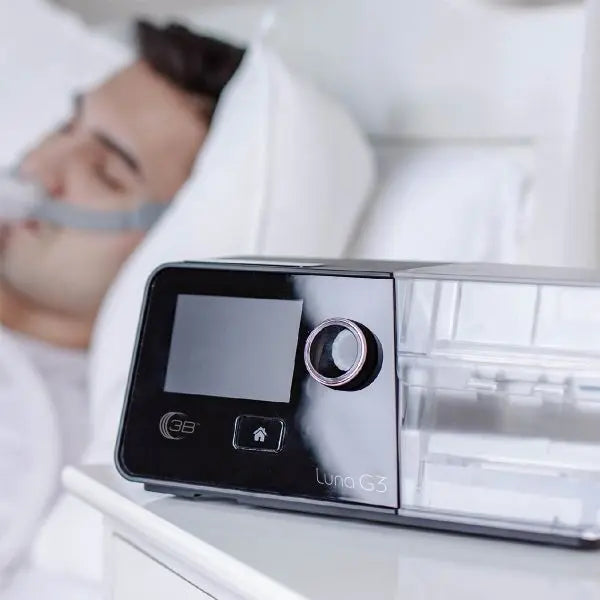
Today, a CPAP machine can sit quietly on a nightstand.
It may have a touchscreen.
It may automatically adjust pressure.
It may connect wirelessly.
It may communicate information to a smartphone app.
Some machines are even small enough to fit easily into a carry-on bag.
That makes it easy to forget just how revolutionary continuous positive airway pressure therapy once was.
Modern CPAP grew from an experimental treatment involving only a handful of patients into one of the most recognized treatments for obstructive sleep apnea in the world.
And one company has played an enormous role in turning that original discovery into the modern home therapy system millions of people recognize today:
ResMed.
According to an August 2026 analysis by iData Research, ResMed ranked first in the global sleep apnea device market based on 2025 market share.
But ResMed did not invent the original nasal CPAP treatment.
That part of the story came first.
To understand how ResMed became the global leader it is today, we need to go back to the beginning.
Before CPAP, Severe Sleep Apnea Was a Much Harder Problem
Obstructive sleep apnea occurs when the upper airway repeatedly narrows or closes during sleep.
Breathing may become shallow or stop temporarily.
The brain repeatedly disrupts sleep in order to restore breathing.
People with untreated obstructive sleep apnea may experience loud snoring, daytime sleepiness, morning headaches, concentration problems, and other symptoms.
Today, positive airway pressure is one of the major treatment options.
Before modern CPAP, however, physicians had far fewer practical noninvasive options.
In severe cases, one treatment was tracheostomy.
A tracheostomy creates an opening in the neck directly into the windpipe.
That can bypass the collapsing upper airway.
It can also be an extremely invasive solution.
Researchers therefore had a powerful reason to search for another approach.
Colin Sullivan and the Question That Changed Sleep Medicine
Australian physician and researcher Dr. Colin Sullivan began investigating whether positive pressure could hold the airway open during sleep.
The basic idea was surprisingly elegant.
If the throat collapsed during sleep, perhaps air pressure delivered through the nose could act like an internal splint and keep the airway from closing.
This concept became the foundation of modern nasal CPAP.
1981: The Landmark CPAP Study
On April 18, 1981, The Lancet published a paper by:
Colin E. Sullivan
F.G. Issa
M. Berthon-Jones
L. Eves
The study was titled:
“Reversal of Obstructive Sleep Apnoea by Continuous Positive Airway Pressure Applied Through the Nares.”
The researchers treated five patients with severe obstructive sleep apnea using continuous positive airway pressure delivered through the nose.
The results demonstrated that positive pressure could prevent the upper airway from repeatedly collapsing during sleep.
That study is widely regarded as a foundational moment in modern CPAP treatment.
Five patients may sound tiny compared with today’s clinical research.
But groundbreaking research often begins with a small number of carefully studied patients.
The important discovery was the principle:
Continuous positive airway pressure delivered through the nose could keep the upper airway open during sleep.
That changed everything.
Early CPAP Equipment Looked Nothing Like Today’s Machines
The early equipment was not sleek.
It was not silent by modern standards.
It did not have a touchscreen.
It did not connect to Wi-Fi.
There was no myAir app.
There were no compact travel CPAP systems.
The University of Sydney’s historical account describes improvised equipment and early masks that were dramatically different from what patients use today.
The first challenge was not making CPAP convenient.
The first challenge was proving that it worked.
Once researchers had demonstrated that nasal positive airway pressure could control airway obstruction, another challenge emerged:
How do you turn an experimental medical concept into a practical therapy that people can use every night at home?
That is where the story of ResMed begins.
1989: Peter Farrell Founds ResCare
Entrepreneur and engineer Peter Farrell recognized the potential of positive airway pressure treatment.
In 1989, Farrell founded a company called ResCare to commercialize equipment related to the emerging treatment.
ResCare would eventually become ResMed.
The name ResMed stands for Respiratory Medicine.
The company officially adopted the ResMed name in 1995.
This distinction is important.
Colin Sullivan and his research colleagues pioneered the clinical use of nasal CPAP for obstructive sleep apnea.
Peter Farrell and the company that became ResMed helped turn that breakthrough into a commercial medical technology platform.
Those are two different achievements.
Both matter.
Why Commercializing CPAP Was So Important
A scientific experiment is not the same thing as a consumer-ready medical device.
To make CPAP practical for widespread home use, companies had to solve numerous problems.
Machines had to become smaller.
They had to become quieter.
Pressure delivery had to become reliable.
Masks had to become more comfortable.
Humidification had to improve.
Patients needed instructions.
Clinicians needed access to treatment information.
Suppliers needed replacement components.
Patients needed help when something went wrong.
The challenge was no longer simply:
Can positive airway pressure keep the airway open?
The challenge became:
Can we make this treatment practical enough for people to live with every night?
ResMed’s Early Development
ResMed’s corporate history includes several important milestones during its early growth.
The company developed and licensed mask technology.
It developed humidification systems.
It worked on automatic positive airway pressure.
It developed software that allowed clinicians to obtain more information about therapy.
Each development addressed another piece of the treatment experience.
The machine itself is obviously important.
But CPAP treatment is an entire system.
There is the device.
There is the mask.
There is the tubing.
There is humidification.
There are comfort settings.
There is replacement equipment.
There is education.
There is follow-up.
The evolution of CPAP has therefore always been about much more than simply making a better air blower.
Why Masks Became So Important
The mask may be the most personal part of CPAP therapy.
The machine sits beside the bed.
The mask sits on your face.
If the mask is uncomfortable, leaks badly, or feels claustrophobic, the quality of the machine may not matter much to the person trying to sleep.
This explains why manufacturers including ResMed invested heavily in mask design.
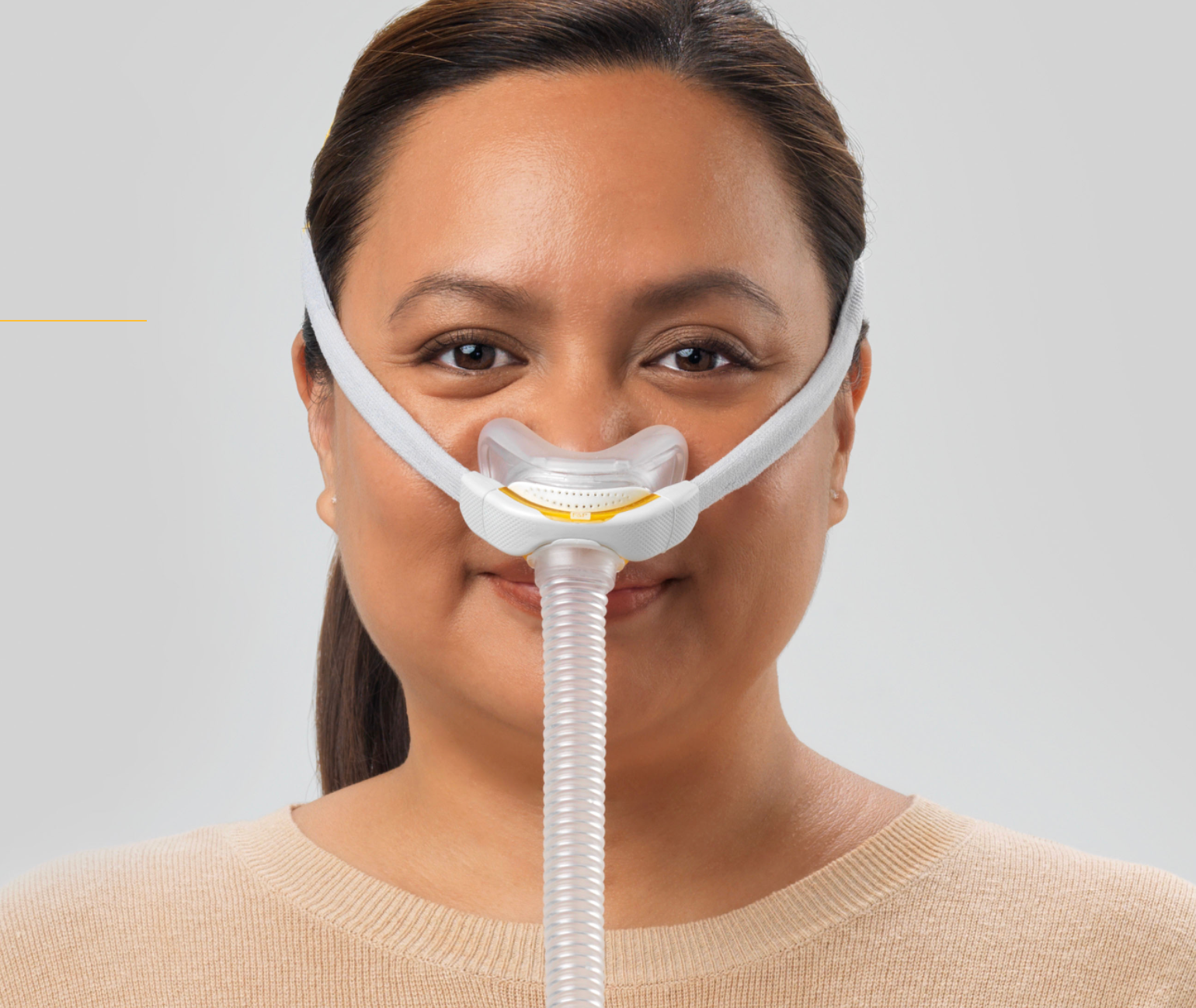
Modern ResMed masks include several broad categories.
Nasal Masks
These cover the nose and deliver pressure through the nasal airway.
Nasal Pillow Masks
These use small cushions or pillows near the nostrils and generally have less facial coverage.
Full-Face Masks
These generally cover both the nose and mouth.
Different people prefer different designs.
Sleep position matters.
Facial structure matters.
Mouth breathing can matter.
Comfort preferences matter.
This is why professional mask selection and fitting remain such important parts of CPAP therapy.
Humidification Becomes Part of the CPAP Experience
Anyone who has used pressurized airflow for hours at a time understands that dryness can become an issue.
Over time, humidification became an increasingly important part of CPAP design.
Modern bedside machines can include integrated heated humidification.
Heated tubing can also help reduce condensation while maintaining moisture.
These comfort developments may seem minor compared with the original invention of CPAP.
But they can make a major difference in daily experience.
That is an important theme in the history of CPAP.
Once the core therapy was proven, innovation increasingly focused on making treatment easier to tolerate.
Automatic Positive Airway Pressure
Traditional CPAP typically delivers a fixed prescribed pressure.
Automatic positive airway pressure, often called APAP or AutoSet in ResMed terminology, can adjust pressure within a prescribed range in response to changing needs during sleep.
This technology helped make pressure delivery more responsive.
However, an automatic device does not eliminate the role of medical evaluation.
The machine operates within treatment parameters.
It does not replace diagnosis.
It does not mean everyone should change settings independently.
It does not mean every patient needs an automatic device.
The therapy mode still needs to fit the person.
CPAP, APAP, and Bilevel Are Not the Same Thing
The term CPAP is often used casually to describe almost any PAP device.
Technically, there are important differences.
CPAP provides continuous positive airway pressure.
APAP automatically adjusts pressure within a defined range.
Bilevel PAP provides one pressure during inhalation and another during exhalation.
These modes can serve different therapeutic purposes.
That means buying a machine should not simply be a question of asking:
“Which one is newest?”
The first question should be:
“Which therapy has been prescribed?”
2014: ResMed Launches AirSense 10
One of the biggest milestones in modern ResMed history came in August 2014 with the introduction of the AirSense 10platform.
AirSense 10 combined multiple features into a compact bedside system.
Depending on model and configuration, features included:
Integrated heated humidification.
Automatic pressure capability.
Expiratory pressure relief.
Wireless connectivity.
Provider access through AirView.
Patient engagement through myAir on compatible units.
The combination helped move CPAP farther into the connected-health era.
A machine was no longer just delivering air.
It could also generate therapy information that could support follow-up.
CPAP Becomes Connected
Before connected equipment became common, treatment information might need to be retrieved through a physical data card or reviewed during an office visit.
Connected machines changed that.
Compatible devices could transmit information to provider systems.
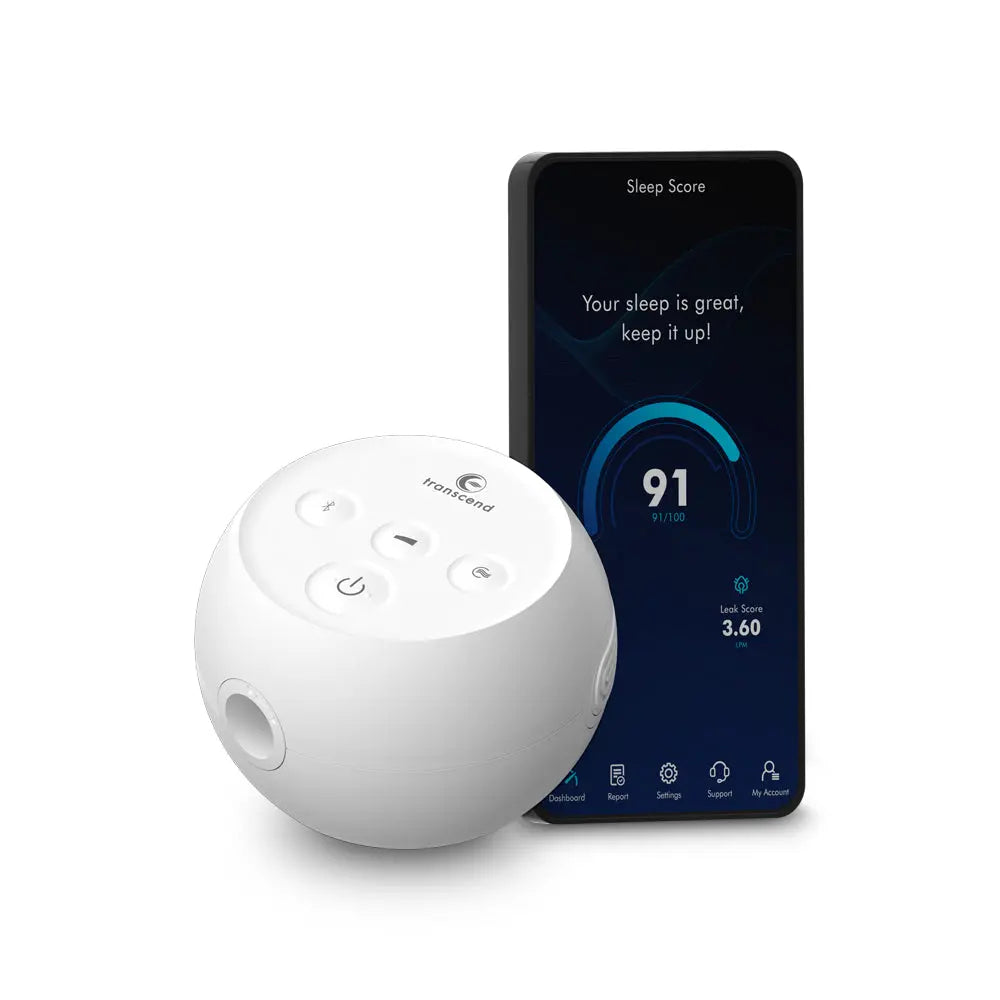
Patients could access information through apps such as myAir.
This created new opportunities for troubleshooting and follow-up.
For example, information might help indicate whether a person is using the machine consistently or whether there are patterns worth discussing.
Technology does not replace professional judgment.
But it can provide more information.
AirView
AirView is ResMed’s provider-facing patient management platform.
Healthcare professionals can use it with supported devices to review therapy information.
This can make follow-up more efficient.
Instead of waiting for the patient to bring the machine into an office, information may be available remotely.
That represents a major evolution from the earliest CPAP systems.
The original 1981 researchers were simply trying to prove that airway pressure could work.
Several decades later, treatment information could be transmitted electronically.
myAir
myAir is designed for the patient.
It can provide information about use and other therapy-related data on compatible equipment.
It can also provide educational and coaching content.
This gives patients more visibility into their own treatment.
However, a score in an app should not be confused with a full medical assessment.
The app is a tool.
It does not replace the clinician.
Not Every AirSense 10 Machine Has the Same Connectivity
This is worth mentioning because it causes confusion.
Some AirSense 10 devices were produced as Card-to-Cloud versions.
Those models do not have the same wireless connectivity as other AirSense 10 units and do not support myAir in the same way.
This is a good example of why consumers should verify the exact model and configuration they are purchasing.
“AirSense 10” does not automatically mean every AirSense 10 ever manufactured has identical features.
2017: ResMed Introduces AirMini
In April 2017, ResMed introduced AirMini, its compact travel PAP platform.
AirMini addressed one of the most common frustrations surrounding CPAP:
Travel.
Traditional bedside machines had become much smaller over the years, but travelers still wanted something even more compact.
AirMini was developed with portability in mind.
It also introduced waterless humidification options using compatible HumidX systems.
This eliminated the need for a traditional water chamber in certain configurations.
For travelers, that can simplify packing.
Small Does Not Mean Universal Compatibility
AirMini uses its own tubing and connection system.
Not every mask connects directly to AirMini.
That means someone buying a travel machine needs to look at the entire system rather than simply assuming their existing bedside setup transfers over.
The mask matters.
The tubing matters.
The humidification system matters.
The power setup matters.
This is another reason professional product assistance can be useful.
2021: AirSense 11 Arrives
In August 2021, ResMed launched the AirSense 11 series in the United States.
AirSense 11 built upon the connected approach of AirSense 10 while adding a touchscreen interface and additional digital support.
ResMed promoted tools such as:
Personal Therapy Assistant
and
Care Check-In
These tools were designed to help patients through the early stages of treatment.
That is significant because the first few weeks of PAP therapy can be challenging.
A person is learning how to wear the mask.
Learning how the humidifier works.
Learning how to clean equipment.
Learning what normal airflow feels like.
Learning how to interpret the machine.
The more understandable that process becomes, the easier it may be for a patient to adapt.
The Rise of Digital Support
The development of AirSense 11 reflects a broader trend.
Medical equipment increasingly combines hardware with software.
The device still performs the core therapy.
But apps, educational content, remote data, and digital guidance are becoming part of the experience.
ResMed has invested heavily in this connected ecosystem.
That may be one of the reasons the company has been able to build such a strong position internationally.
The Newer Era of Personalized Comfort
ResMed has continued developing digital tools intended to personalize parts of the CPAP experience.
In late 2025, the company announced FDA clearance for personalized therapy comfort settings marketed as Smart Comfort.
The concept is to use data to recommend certain comfort adjustments for eligible users.
Importantly, comfort settings are not the same thing as prescribed therapeutic pressure.
That distinction matters.
Technology can assist with comfort.
The medical treatment plan still belongs with the appropriate healthcare professionals.
How Big Has ResMed Become?
By fiscal year 2026, ResMed reported approximately $5.7 billion in annual company revenue.
That figure includes more than CPAP machines alone.
ResMed is a broader sleep and respiratory health company.
Still, the number illustrates the enormous scale the organization has reached compared with its beginnings in 1989.
The company has grown from commercializing an emerging therapy into a global medical technology organization.
Is ResMed Really the No. 1 Company?
According to an August 2026 market analysis by iData Research, ResMed ranked first based on 2025 global market share in the sleep apnea device market segment it analyzed.
That segment includes PAP devices and sleep therapy masks.
So when we say ResMed is the No. 1 company in this article, we are referring specifically to that market-share ranking.
That does not mean every ResMed mask fits every person best.
It does not mean every patient should receive the same machine.
It does not mean other manufacturers have contributed nothing to PAP technology.
It means ResMed currently holds the leading position in the global sleep apnea device market as defined by that research.
ResMed’s Growth Did Not Happen for Only One Reason
There is probably no single explanation for ResMed’s rise.
Several factors appear important.
The company developed machines.
It developed masks.
It developed humidification.
It developed automatic pressure technology.
It developed software.
It developed patient apps.
It developed provider platforms.
It developed travel PAP.
It developed an interconnected equipment ecosystem.
That comprehensive approach helped make the company much more than a manufacturer of bedside blowers.
The Philips Recall Also Changed the Market
It would be incomplete to discuss the modern PAP market without mentioning Philips Respironics.
In 2021, Philips announced a major recall involving certain CPAP, bilevel PAP, and ventilator devices.
The recall and subsequent regulatory actions significantly affected the PAP market.
The FDA later documented a consent decree that restricted certain Philips Respironics production and sales activities until specified requirements were met.
ResMed was already a major company before the recall.
However, the disruption at one of its largest competitors clearly became part of the broader market environment.
A fair account of ResMed’s current dominance should acknowledge both long-term product development and changes within the competitive landscape.
Why Being No. 1 Does Not Mean One Product Fits Everyone
Market leadership is meaningful.
But it should not replace individual equipment selection.
One person may need fixed-pressure CPAP.
Another may need AutoSet.
Another may require bilevel therapy.
One person may prefer nasal pillows.
Another may need a full-face mask.
One person may want AirMini for travel.
Another may never travel and care more about bedside comfort.
There is no single universal CPAP setup.
That is why the prescription, mask fit, comfort, and professional support still matter.
Professional Support Still Matters Even With Modern Technology
Modern CPAP machines are far easier to use than early systems.
But people still have questions.
Why is my mask leaking?
Why is my mouth dry?
Why is water collecting in the hose?
Why does my mask leave marks?
Why is the machine changing pressure?
Which replacement cushion do I need?
Can I use this mask with AirMini?
Why does my AirSense 10 not connect to myAir?
These are the kinds of practical questions that can determine whether treatment feels manageable.
A website can provide information.
A manual can provide instructions.
But sometimes people need an actual person.
USCPAP.com and USA Medical Supply
USCPAP.com is a division of USA Medical Supply.
We specialize in ResMed equipment and supplies.
USA Medical Supply’s West Springfield location also has licensed respiratory therapist assistance available.
That gives customers access to something very valuable:
Knowledgeable human support.
We want customers to understand the equipment they are buying.
We want them to know which replacement part fits.
We want them to understand compatibility.
We want them to know when a question needs to go back to their physician or sleep specialist.
The technology may be sophisticated.
The experience should still be understandable.
What CPAP History Teaches Us
The history of CPAP offers a fascinating lesson in medical technology.
The original breakthrough did not look anything like the equipment we use today.
It did not need to.
It proved the concept.
Everything that followed was about refinement.
Smaller machines.
Quieter motors.
Better masks.
Better humidification.
Automatic pressure.
Portable systems.
Wireless connectivity.
Smartphone apps.
Provider software.
Digital education.
Personalized comfort.
Each generation attempted to remove another obstacle between the patient and effective nightly therapy.
That is perhaps the most important part of ResMed’s story.
It is not simply that the company sells CPAP machines.
It has spent decades developing the broader ecosystem around positive airway pressure treatment.
Frequently Asked Questions
Who invented CPAP?
Dr. Colin Sullivan and his research colleagues published the landmark 1981 study demonstrating nasal continuous positive airway pressure for obstructive sleep apnea.
Did ResMed invent CPAP?
No. The landmark nasal CPAP treatment existed before ResMed was founded. ResMed’s role was in commercializing and developing PAP technology into practical medical products.
When was ResMed founded?
Peter Farrell founded ResCare in 1989. The company later became ResMed in 1995.
What does ResMed mean?
The name is derived from Respiratory Medicine.
Is ResMed the largest CPAP company?
According to iData Research’s August 2026 analysis, ResMed ranked first based on 2025 global market share in the sleep apnea device market segment it evaluated.
When did AirSense 10 come out?
ResMed introduced AirSense 10 in August 2014.
When was AirMini released?
ResMed unveiled AirMini in April 2017.
When did AirSense 11 launch?
AirSense 11 launched in the United States in August 2021.
Is AirSense 11 automatically better than AirSense 10?
Not necessarily for every person. The correct choice depends on prescription, therapy mode, features, connectivity, comfort preferences, and other needs.
Does every AirSense 10 work with myAir?
No. AirSense 10 Card-to-Cloud models do not offer the same myAir connectivity as wireless versions.
Can I use any mask with AirMini?
No. AirMini has specific compatibility requirements.
Is CPAP the same as oxygen?
No. CPAP provides positive airway pressure. Supplemental oxygen is a different therapy and may be prescribed separately when medically necessary.
Does CPAP cure sleep apnea?
CPAP generally treats obstructive sleep apnea while it is being used. It does not automatically mean the underlying condition has permanently disappeared.
What should I do if I am struggling with CPAP?
Contact your equipment provider and treating healthcare professional rather than simply stopping therapy or changing prescribed settings on your own.
From Five Patients to a Global Industry
It is remarkable to think about how far CPAP has come.
In 1981, researchers published results involving five patients and an experimental positive-pressure system.
Today, millions of people around the world use sophisticated PAP equipment in their own homes.
Machines can automatically adjust pressure.
Masks are available in multiple styles.
Humidification is integrated.
Therapy information can be transmitted remotely.
Patients can view data through smartphone apps.
Portable PAP devices can fit into luggage.
And ResMed, founded eight years after the original landmark publication, has grown into the leading company in the global sleep apnea device market.
The hardware has changed enormously.
The central goal has not.
Help people breathe better while they sleep.
At USCPAP.com, we are proud to specialize in ResMed products and help customers better understand the equipment they depend on.
USCPAP.com / USA Medical Supply
1779 Riverdale Street
West Springfield, MA 01089
Call: 413-733-7843
Text: 413-200-4191
Visit USCPAP.com for ResMed CPAP machines, masks, supplies, and accessories.
This article is intended for educational purposes and does not replace medical diagnosis, treatment, or advice from your sleep specialist or prescribing healthcare professional.
Complete Bibliography
-
Sullivan CE, Issa FG, Berthon-Jones M, Eves L. Reversal of Obstructive Sleep Apnoea by Continuous Positive Airway Pressure Applied Through the Nares. The Lancet. 1981;1(8225):862–865. https://pubmed.ncbi.nlm.nih.gov/6112294/
-
University of Sydney. How the CPAP Machine Beats Deadly Sleep Apnoea. https://www.sydney.edu.au/news-opinion/news/2018/03/16/how-the-cpap-machine-beats-deadly-sleep-apnoea.html
-
National Heart, Lung, and Blood Institute. Sleep Apnea. https://www.nhlbi.nih.gov/health/sleep-apnea
-
National Heart, Lung, and Blood Institute. CPAP. https://www.nhlbi.nih.gov/health/cpap
-
National Heart, Lung, and Blood Institute. Sleep Apnea Treatment. https://www.nhlbi.nih.gov/health/sleep-apnea/treatment
-
ResMed. Our History. https://www.resmed.com/en-us/about-us/history/
-
ResMed. AirSense 10. https://www.resmed.com/en-us/products/cpap/machines/airsense-10/
-
ResMed. AirSense 11. https://www.resmed.com/en-us/products/cpap/machines/airsense-11/
-
ResMed. AirMini. https://www.resmed.com/en-us/products/cpap/machines/airmini/
-
ResMed. CPAP Masks. https://www.resmed.com/en-us/products/cpap/masks/
-
ResMed. myAir. https://www.resmed.com/en-us/health-professionals/myair-app/
-
ResMed. AirView. https://www.resmed.com/en-us/health-professionals/solutions/airview/
-
ResMed. AirSense 10 Launch Announcement. August 18, 2014.
-
ResMed. AirMini Launch Announcement. April 25, 2017.
-
ResMed. AirSense 11 Launch Announcement. August 16, 2021.
-
ResMed. Smart Comfort FDA Clearance Announcement. December 8, 2025.
-
iData Research. How Big Is the Sleep Apnea Device Market? Size, Growth, and Leaders in 2026. August 25, 2026. https://idataresearch.com/news-sleep-apnea-device-market/
-
ResMed. Fourth Quarter and Fiscal Year 2026 Financial Results. August 6, 2026.
-
U.S. Food and Drug Administration. Recalled Philips Ventilators, BiPAP Machines, and CPAP Machines.https://www.fda.gov/medical-devices/respiratory-devices/recalled-philips-ventilators-bipap-machines-and-cpap-machines
-
Patil SP, Ayappa IA, Caples SM, Kimoff RJ, Patel SR, Harrod CG. Treatment of Adult Obstructive Sleep Apnea With Positive Airway Pressure: Clinical Practice Guideline. Journal of Clinical Sleep Medicine.2019;15(2):335–343.
-
Patil SP, Ayappa IA, Caples SM, Kimoff RJ, Patel SR, Harrod CG. Treatment of Adult Obstructive Sleep Apnea With Positive Airway Pressure: Systematic Review, Meta-Analysis, and GRADE Assessment. Journal of Clinical Sleep Medicine. 2019;15(2):301–334.
-
USCPAP.com. About Us. https://uscpap.com/pages/about-us
-
USCPAP.com. Contact. https://uscpap.com/pages/contact





Leave a comment
This site is protected by hCaptcha and the hCaptcha Privacy Policy and Terms of Service apply.