
Article: CPAP FAQ 2027: 125 Answers & Complete ResMed Product Guide
CPAP FAQ 2027: 125 Answers & Complete ResMed Product Guide
The Complete CPAP FAQ for 2027: 125 Questions Answered About Sleep Apnea, CPAP Therapy & ResMed Products
Your Ultimate Guide to ResMed AirSense, AirCurve, AirMini, AirFit, AirTouch, Humidification, Supplies & Better Sleep
CPAP therapy can change the way you sleep, but getting started often raises more questions than patients expect.
Which CPAP machine should you buy? What's the difference between CPAP, APAP, and bilevel? Which ResMed mask is best for a side sleeper? Why do you wake up with dry mouth? When should you replace your tubing? Is an AirMini suitable for everyday use?
These are important questions, and the answers can affect comfort, adherence, and the effectiveness of treatment.
At USCPAP.com, a division of USA Medical Supply, we help customers understand the equipment they depend on for sleep therapy.
We are an authorized ResMed dealer with more than a decade of experience carrying ResMed products. Our team includes licensed respiratory therapists, and our West Springfield, Massachusetts, retail location provides in-person access to CPAP equipment and supplies.
For this 2027 edition, we've organized 125 frequently asked questions covering the entire CPAP experience, from diagnosis and treatment to selecting ResMed machines, masks, humidifiers, tubing, and replacement components.
Important: This guide is based on manufacturer and clinical information available as of October 15, 2026. Product availability, insurance policies, and clinical recommendations can change. CPAP and bilevel therapy must be prescribed and managed appropriately by qualified healthcare professionals.
The ResMed Product Families: Your Quick Reference Guide
ResMed offers an extensive range of sleep-therapy equipment.
USCPAP.com carries ResMed products across the principal machine, mask, accessory, and replacement-supply categories. Customers should confirm availability, sizes, exact SKUs, and compatibility at the time of purchase.
ResMed CPAP, APAP and Bilevel Machines
| ResMed series | Therapy category | Main purpose |
|---|---|---|
| AirSense 11 AutoSet | APAP | Auto-adjusting home sleep apnea therapy |
| AirSense 11 CPAP | CPAP | Fixed-pressure home therapy |
| AirSense 10 AutoSet | APAP | Established auto-adjusting therapy |
| AirSense 10 CPAP | CPAP | Fixed-pressure therapy |
| AirMini | Travel CPAP/APAP | Compact portable therapy |
| AirCurve 11 VAuto | Bilevel | Auto-adjusting bilevel therapy for appropriate OSA patients |
| AirCurve 11 S | Bilevel | Fixed-level bilevel therapy when prescribed |
| AirCurve 11 ASV | Adaptive servo-ventilation | Selected complex sleep-disordered breathing conditions |
| AirCurve 10 series | Bilevel/ASV | Established bilevel and advanced therapy options, depending on model |
Not every machine is suitable for every patient, and availability varies.
ResMed AirFit and AirTouch Masks
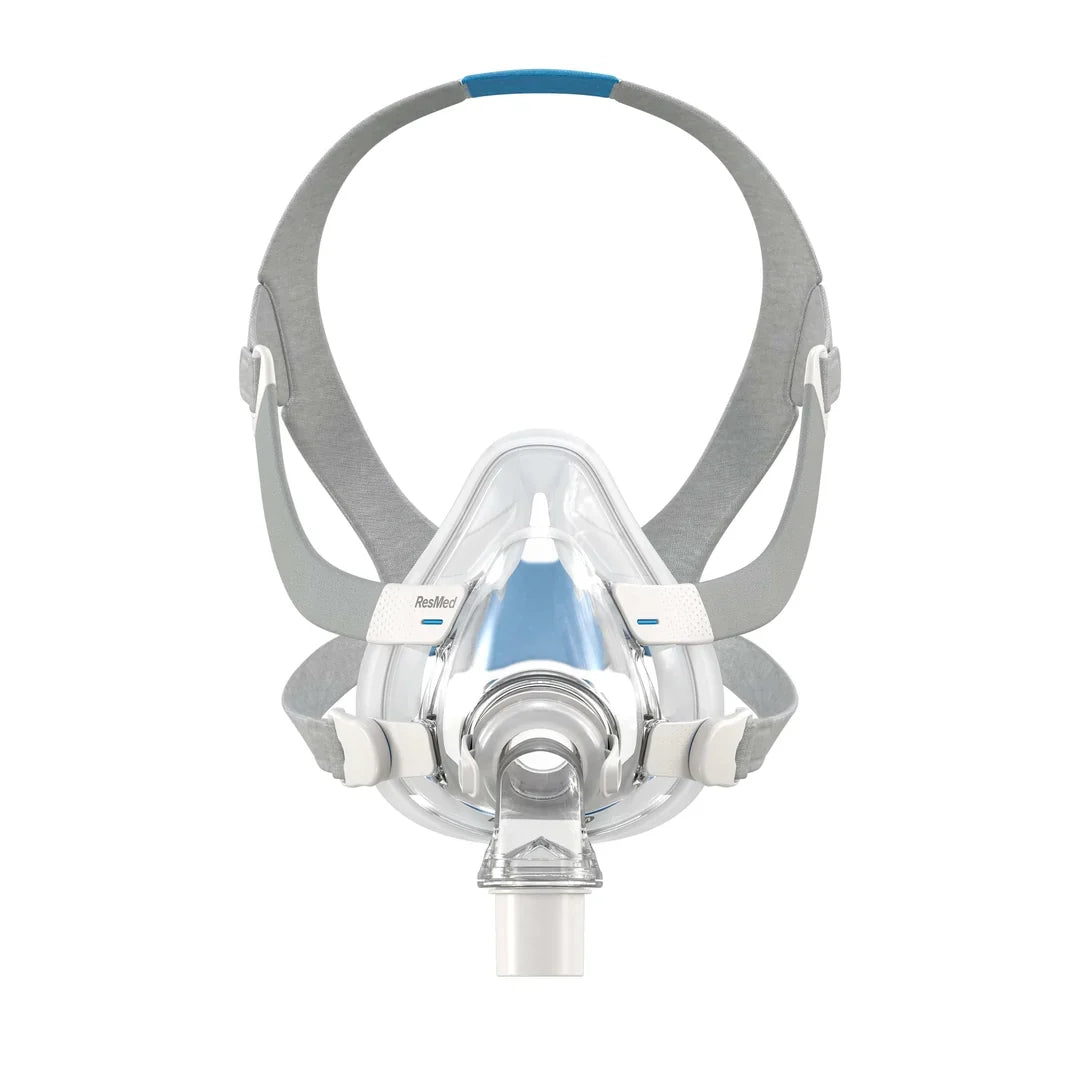
Full-face and oral-nasal options: AirFit F20, F30, F30i, F40, X30i; AirTouch F20, F30i Clear, and F30i Comfort.
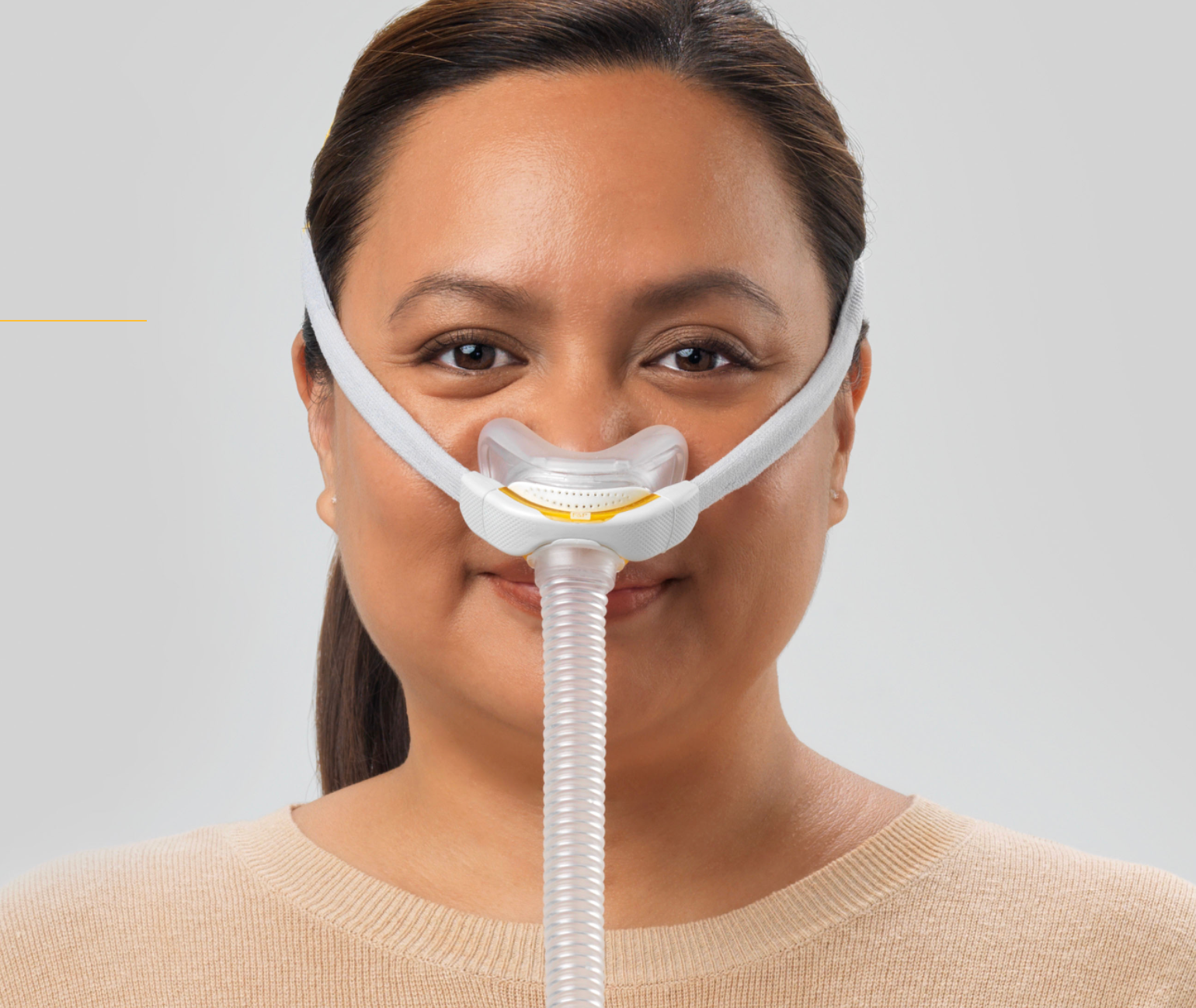
Nasal masks: AirFit N20, N30, N30i; AirTouch N20 and N30i.
Nasal pillows: AirFit P10, P30i, and the dedicated AirFit P10 for AirMini system.
Other specialized or established mask families: Certain AirFit non-magnetic variants, Pixi pediatric masks, and older ResMed Swift, Mirage, and Quattro systems, subject to clinical suitability and availability.
ResMed Supplies and Accessories
The ResMed ecosystem includes HumidAir humidifier water tubs, ClimateLineAir heated tubing, standard tubing, device air filters, hypoallergenic filters, cushions, frames, headgear, elbows, replacement clips, power supplies, travel cases, AirMini HumidX components, and compatible travel accessories.
Each item should be selected by exact device and mask model.
Part 1: Understanding Sleep Apnea and CPAP Therapy
1. What is sleep apnea?
Sleep apnea is a sleep-related breathing disorder characterized by repeated disruptions in breathing during sleep.
These interruptions may interfere with sleep quality and oxygen levels. Some people experience loud snoring, gasping, daytime sleepiness, or morning headaches, while others have fewer obvious symptoms.
A medical evaluation and appropriate sleep testing are needed for diagnosis.
2. What is obstructive sleep apnea?
Obstructive sleep apnea (OSA) occurs when the upper airway repeatedly narrows or collapses during sleep.
Although a person continues attempting to breathe, airflow may become restricted or temporarily stop.
CPAP therapy helps maintain an open airway by delivering pressurized air during sleep.
3. What is central sleep apnea?
Central sleep apnea involves disruptions in breathing caused by changes in respiratory control rather than the same upper-airway obstruction seen in typical OSA.
Treatment depends on the underlying condition and may differ substantially from standard CPAP.
Certain ResMed AirCurve ASV devices are designed for selected patients with complex sleep-disordered breathing, but specialized assessment is essential.
4. Can someone have both obstructive and central sleep apnea?
Yes. Mixed or complex breathing patterns can occur.
A sleep specialist may examine sleep-study results and treatment data to determine the most appropriate therapy.
Not every breathing event seen on a CPAP screen represents the same condition.
5. What does CPAP stand for?
CPAP means Continuous Positive Airway Pressure.
A CPAP system uses a machine, air tubing, and a suitable mask to deliver prescribed air pressure that helps keep the airway open.
6. What does APAP mean?
APAP stands for Auto-Adjusting Positive Airway Pressure.
Instead of maintaining one fixed pressure, an APAP device adjusts pressure within a clinician-prescribed range in response to breathing-related information.
ResMed AirSense AutoSet machines are examples.
7. What is bilevel therapy?
Bilevel positive airway pressure delivers different pressure levels during inhalation and exhalation.
The higher inspiratory pressure and lower expiratory pressure can provide specific therapeutic benefits.
ResMed AirCurve machines offer bilevel options for appropriately prescribed patients.
8. Is BiPAP the same as bilevel?
BiPAP is a commonly used term associated with bilevel positive airway pressure, although it is also a particular manufacturer's trademark.
ResMed generally uses terminology such as bilevel, VAuto, and AirCurve.
9. How does CPAP help prevent airway collapse?
CPAP delivers positive pressure that acts as a pneumatic support to the upper airway.
By helping prevent obstruction, treatment can reduce obstructive breathing events during sleep when appropriately prescribed and used.
10. Does CPAP provide oxygen?
Standard CPAP primarily delivers pressurized room air.
It is not the same as an oxygen concentrator or oxygen cylinder.
Some patients are separately prescribed supplemental oxygen, but oxygen should never be added without appropriate medical direction and compatible equipment.
11. Can CPAP cure sleep apnea?
CPAP generally manages sleep apnea rather than permanently curing it.
The treatment works while it is being used. If the underlying breathing disorder remains present, stopping treatment may allow breathing events to return.
12. Does everyone with sleep apnea need CPAP?
No. Treatment recommendations depend on severity, symptoms, medical history, and individual circumstances.
Alternative approaches may include certain oral appliances, positional therapy, lifestyle changes, surgery, or other medically appropriate interventions.
13. Can CPAP improve daytime energy?
Effective treatment may improve daytime sleepiness, concentration, and perceived sleep quality.
The response varies. Persistent fatigue despite treatment should prompt evaluation of therapy effectiveness and possible additional causes.
14. How soon will CPAP start helping?
Some people notice improvements within days; others need several weeks of adjustment.
Comfort, mask fit, adequate treatment use, and correct therapy settings all matter.
Persistent symptoms should be discussed with the treating clinician.
Part 2: Diagnosis, Prescriptions and Starting Treatment
15. How is sleep apnea diagnosed?
Diagnosis typically involves medical history and a sleep study, performed either at home or in a sleep laboratory when appropriate.
Your healthcare provider determines which testing method is suitable.
16. What is an AHI score?
AHI stands for Apnea-Hypopnea Index.
It represents the average number of qualifying apnea and hypopnea events per hour of sleep during diagnostic testing.
17. What do mild, moderate, and severe sleep apnea mean?
Common adult AHI categories are mild at 5 to fewer than 15 events per hour, moderate at 15 to fewer than 30, and severe at 30 or more.
Diagnosis and treatment decisions require more than the number alone.
18. Is a low AHI on my ResMed machine a good sign?
Generally, fewer residual breathing events can be encouraging.
However, a device-generated event index is not identical to laboratory testing, and the number must be interpreted along with leaks, symptoms, oxygenation when relevant, and other clinical information.
19. What is a good CPAP AHI?
A residual AHI below five is often used as a general reference, but it is not a universal guarantee of optimal treatment.
A clinician should assess what is appropriate for your specific condition.
20. Do I need a prescription to buy a CPAP machine?
Yes. In the United States, CPAP machines are prescription medical devices.
USCPAP.com requires appropriate prescription information before fulfilling orders for products that legally require it.
21. Can my primary care doctor prescribe CPAP?
An appropriately licensed healthcare professional may be able to prescribe treatment based on the clinical circumstances and applicable requirements.
A sleep specialist may be needed for complicated cases.
22. Can I purchase replacement equipment using an existing prescription?
Possibly, depending on the prescription, what it authorizes, the product, and whether it remains acceptable under applicable requirements.
USCPAP.com can explain what documentation is needed to process an order.
23. Can I select my own CPAP pressure?
Pressure settings should be established and adjusted under appropriate clinical direction.
Do not independently change treatment pressures based solely on internet recommendations or a single night's results.
Part 3: ResMed CPAP and Bilevel Machine FAQs
24. What is the ResMed AirSense 11 AutoSet?
The ResMed AirSense 11 AutoSet is an auto-adjusting CPAP device with integrated heated humidification, touchscreen controls, and digital patient-support features.
It is designed for patients prescribed compatible auto-adjusting therapy.
25. What makes AirSense 11 different from older CPAP machines?
AirSense 11 combines established ResMed treatment algorithms with an updated interface and connected support features.
Depending on configuration and availability, features include myAir, Personal Therapy Assistant, Care Check-In, AutoRamp, and Climate Control.
26. Is AirSense 11 an APAP or a CPAP?
The AirSense 11 family includes both fixed-pressure and auto-adjusting models.
The AutoSet model can operate in prescribed auto-adjusting therapy modes. Make sure you purchase the model appropriate for your prescription.
27. What is the AirSense 11 For Her algorithm?
ResMed AirSense 11 AutoSet includes an AutoSet for Her therapy algorithm that clinicians may select for appropriate patients.
It is a clinical mode, not a reason to change therapy settings without professional guidance.
28. Does AirSense 11 have a built-in humidifier?
Yes. AirSense 11 includes integrated HumidAir heated humidification capability and uses a compatible water tub.
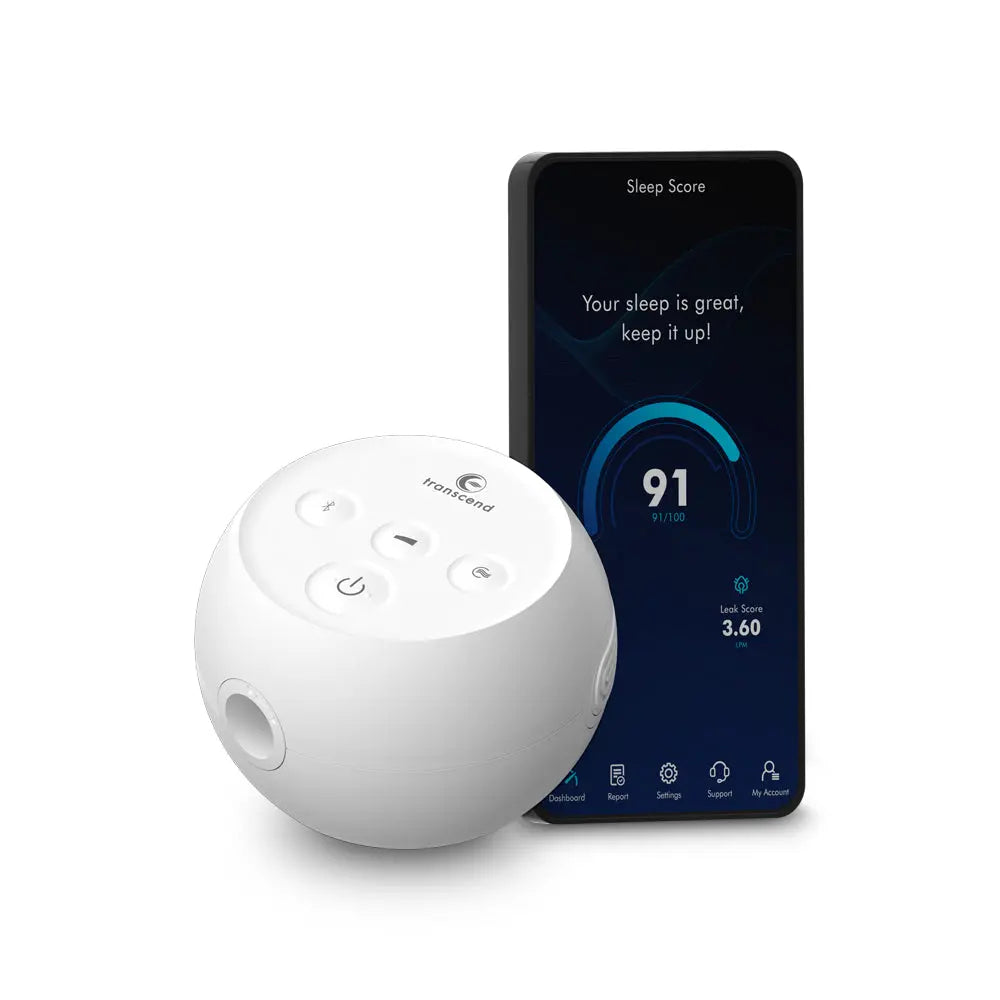
29. Does AirSense 11 work with myAir?
Yes, with supported connectivity and setup.
The myAir platform can provide therapy information, encouragement, and troubleshooting resources. It does not replace medical care.
30. What is ResMed Personal Therapy Assistant?
Personal Therapy Assistant is a support feature available with applicable Air11 devices through myAir.
It provides guided assistance with equipment setup, adapting to therapy, and resolving certain common equipment difficulties.
31. What is Care Check-In?
Care Check-In is a ResMed support feature designed to ask therapy-related questions and help users address adjustment challenges.
Availability and functionality depend on supported equipment and service configuration.
32. What is the ResMed AirSense 10 AutoSet?
The AirSense 10 AutoSet is an established auto-adjusting CPAP machine.
It offers features such as AutoRamp, expiratory pressure relief, and heated humidification.
33. Is AirSense 10 still a good machine?
For appropriately prescribed therapy, a functioning AirSense 10 can remain a suitable treatment device.
The correct choice depends on clinical requirements, equipment condition, model configuration, and personal preferences.
34. What's the difference between AirSense 10 and AirSense 11?
AirSense 11 offers updated digital support features and an updated user interface.
AirSense 10 remains a proven platform with established comfort features. Mask compatibility, tubing, water tubs, and digital connectivity should be checked by exact model.
35. What does AirSense 10 Card-to-Cloud mean?
Card-to-Cloud models store therapy information on a removable data card instead of providing the same integrated cellular reporting found on certain connected models.
Importantly, ResMed myAir is not currently available for AirSense 10 or AirCurve 10 Card-to-Cloud machines.
36. What is ResMed AirMini?
The ResMed AirMini is a compact portable CPAP device designed for travel and other situations where smaller equipment is desirable.
It supports specified therapy modes and compatible mask configurations.
37. Is AirMini suitable for everyday use?
AirMini can be used for appropriate prescribed therapy, including at home.
However, its mask compatibility, humidification arrangements, noise characteristics, and portability differ from larger bedside systems.
38. What is the ResMed AirCurve 11 VAuto?
The AirCurve 11 VAuto is a bilevel machine that automatically adjusts compatible therapy pressures within prescribed settings.
It is intended for patients whose clinicians determine that VAuto therapy is appropriate.
39. What is AirCurve 11 S?
AirCurve 11 S is a bilevel device offering prescribed fixed inspiratory and expiratory pressure levels.
It differs from VAuto and ASV therapy modes, so the exact model matters.
40. What is AirCurve 11 ASV?
AirCurve 11 ASV is an adaptive servo-ventilation device for selected patients with complex sleep-disordered breathing.
It is not a general-purpose CPAP upgrade.
Specialist evaluation is essential, particularly because ResMed lists an ASV contraindication for patients with chronic symptomatic heart failure, LVEF of 45% or less, and moderate-to-severe predominant central sleep apnea.
41. Are AirCurve 10 models still relevant?
Yes. AirCurve 10 devices include established bilevel and certain advanced therapy configurations.
Customers should confirm the exact model, therapy mode, availability, and compatible replacement components.
Part 4: The Complete ResMed CPAP Mask FAQ
42. Why does choosing the correct CPAP mask matter?
The mask is the interface between the patient and the therapy system.
Poor fit can contribute to air leaks, discomfort, sleep disruption, and difficulty maintaining treatment.
43. What are the main types of CPAP masks?
The main categories include full-face masks, nasal masks, nasal-cradle masks, nasal-pillows masks, and certain specialized oral-nasal designs.
ResMed's AirFit and AirTouch families include options across these categories.
44. What does AirFit mean?
ResMed AirFit masks generally use silicone cushions.
The product family includes multiple mask shapes designed for different coverage and movement preferences.
45. What does AirTouch mean?
AirTouch masks emphasize softer contact materials, including memory foam or ResMed's newer ComfiSoft fabric-based cushion designs.
Different AirTouch materials have different cleaning requirements.
46. What is the ResMed AirFit F20?
AirFit F20 is a traditional full-face mask with silicone cushioning that covers the nose and mouth.
It may suit patients seeking more conventional full-face coverage.
47. What is AirTouch F20?
AirTouch F20 is a full-face mask that uses ResMed UltraSoft memory foam cushioning.
It is an option for patients who prefer memory foam rather than the standard silicone seal used by AirFit F20.
48. What's the difference between AirFit F20 and AirTouch F20?
The primary distinction is cushion material.
AirFit F20 uses silicone; AirTouch F20 uses memory foam. Selected components are designed to be interchangeable, but buyers must confirm the correct parts.
49. What is the ResMed AirFit F40?
AirFit F40 is a minimalist full-face mask with a low-profile cushion that rests beneath the nose.
It provides nose-and-mouth therapy coverage without the same bridge-of-nose contact as a traditional full-face mask.
50. Who might prefer AirFit F40?
It may appeal to people who breathe through their mouth, want an under-the-nose full-face design, or prefer a more open field of vision.
Appropriate fit and seal should be confirmed.
51. What is ResMed AirFit F30?
AirFit F30 is an established under-the-nose full-face mask design.
Customers comparing F30, F30i, and F40 should pay attention to tube placement, cushion configuration, and compatibility.
52. What is AirFit F30i?
AirFit F30i is a full-face mask with a top-of-the-head tubing connection.
Its design can help keep the tube away from the front of the face while sleeping.
53. What is the ResMed AirFit X30i?
AirFit X30i is an oral-nasal mask that combines mouth coverage with nasal pillows.
It is intended to provide a different sealing arrangement from a traditional full-face or under-the-nose mask.
54. How is AirFit X30i different from F30i?
X30i incorporates a nasal-pillows component as well as mouth coverage.
F30i uses an under-the-nose full-face cushion design. Their differing contact points may influence comfort and fit.
55. What is the AirTouch F30i Clear?
AirTouch F30i Clear is a full-face mask featuring a ComfiSoft cushion, under-the-nose fit, and top-of-head hose connection.
Its design emphasizes softness at the seal while allowing freedom of movement.
56. What is AirTouch F30i Comfort?
AirTouch F30i Comfort adds a fully fabric-wrapped frame to the ComfiSoft cushion design.
It is intended for patients who want a softer feel around the frame and seal.
57. What's the difference between F30i Clear and F30i Comfort?
Both use related ComfiSoft cushion technology.
F30i Comfort emphasizes its fabric-wrapped frame, while F30i Clear uses a different frame arrangement.
Availability should be confirmed for the exact system and replacement parts.
58. Are the newer F30i cushions interchangeable?
ResMed identifies specific cushion interchangeability among certain F30i-related systems, including AirTouch F30i Comfort and selected AirFit frames.
However, this does not mean every part fits every mask.
Always confirm the manufacturer's compatibility listing before ordering a cushion or frame separately.
59. What is the AirFit N20?
AirFit N20 is a traditional nasal mask that covers the nose while leaving the mouth uncovered.
It is an established option for people prescribed nasal CPAP therapy.
60. What is AirTouch N20?
AirTouch N20 is a nasal mask featuring UltraSoft memory foam cushioning.
It is designed for patients who prefer a memory foam nasal seal.
61. What is AirFit N30?
AirFit N30 is a minimalist nasal-cradle mask that rests under the nose.
It can provide an open field of vision and relatively little facial contact.
62. What is AirFit N30i?
AirFit N30i is an under-the-nose nasal-cradle mask with a top-of-head tube connection.
This design can be appealing to people who change sleep positions.
63. What is AirTouch N30i?
AirTouch N30i features a fabric-wrapped frame and ComfiSoft nasal cushion.
It is designed for patients who want a soft-contact nasal mask with the tubing positioned above the head.
64. What is AirFit P10?
AirFit P10 is a minimalist nasal-pillows mask.
Its small cushions seal at the nostrils rather than covering the entire nose.
65. What is AirFit P30i?
AirFit P30i combines nasal pillows with top-of-head tubing.
It may suit users who want nasal-pillows therapy without front-of-face tubing.
66. What are non-magnetic ResMed masks?
ResMed offers certain masks or mask configurations without magnetic components.
These are particularly important for patients who cannot use masks with magnets due to applicable contraindications.
67. Are magnetic CPAP mask clips safe for everyone?
No.
ResMed contraindicates magnetic masks for users, or close contacts, with certain active medical implants or ferromagnetic implants and objects.
Examples include some pacemakers, implantable defibrillators, neurostimulators, and other specified medical devices.
68. How far should mask magnets be kept from susceptible implants?
ResMed's warning specifies at least 6 inches (150 mm) of separation from implants or medical devices that may be affected by magnetic interference.
This warning does not override the manufacturer's contraindications. Patients with affected devices should use an appropriate non-magnetic mask after consultation with their healthcare professionals.
69. Does ResMed make pediatric CPAP masks?
Yes. ResMed's Pixi is a pediatric mask designed for specific clinical use.
Pediatric sleep apnea assessment and therapy require appropriately qualified pediatric care.
Part 5: CPAP Mask Fitting and Comfort
70. Which ResMed mask is best for side sleepers?
Different ResMed masks may work well for side sleeping.
Models such as N30i, P30i, AirTouch N30i, F30i, and F40 may be worth comparing, depending on breathing habits, facial anatomy, and tubing preference.
71. Which mask is best for mouth breathers?
A suitable full-face or oral-nasal mask is often considered when mouth breathing interferes with nasal therapy.
ResMed choices include F20, F30i, F40, and X30i.
72. Are nasal pillows better than nasal masks?
Not universally.
Nasal pillows minimize facial coverage but can feel different at the nostrils. Nasal masks use a broader sealing area.
Comfort and effectiveness depend on the individual.
73. Which ResMed mask is suitable for someone with a beard?
Facial hair can affect seals, especially where cushions contact the beard.
Certain nasal pillows or masks with different contact materials may be useful. Proper fitting is more reliable than assuming one model works for every beard.
74. Which mask is best for sensitive skin?
AirTouch memory foam and ComfiSoft fabric-based options may appeal to some people with skin sensitivity.
However, irritation can also arise from incorrect sizing, excess strap tension, moisture, or an unsuitable cleaning routine.
75. Why is my CPAP mask leaking?
Leaks can occur when the cushion is the wrong size, the mask is misaligned, headgear has worn out, tubing pulls on the mask, or the seal becomes disrupted during sleep.
The first step is to identify the source rather than automatically tightening the straps.
76. Should I tighten my CPAP mask to stop leaks?
Not necessarily.
Overtightening can distort the cushion and cause discomfort or additional leakage.
Follow the fitting instructions for your particular mask while the therapy device is operating.
77. Why does air blow toward my eyes?
Air escaping near the upper mask seal may be directed toward the eyes.
Check size, cushion positioning, and fit. Persistent eye irritation should be discussed with your healthcare team.
78. Why do I wake up with red marks?
Some temporary marks can occur from mask contact.
Deep, persistent, painful, or worsening marks may indicate excessive pressure, incorrect sizing, or skin irritation requiring attention.
79. Can a CPAP mask cause sores?
Yes. An unsuitable fit or prolonged pressure can irritate or injure the skin.
Do not ignore broken skin, persistent pain, or signs of infection.
80. Why does my mouth become dry with CPAP?
Dry mouth may result from mouth leakage, mouth breathing, insufficient effective humidification, or other causes.
Mask fit, humidifier function, nasal symptoms, and medications may all be relevant.
81. Can a nasal mask work if I sometimes breathe through my mouth?
Sometimes, but substantial mouth leakage can interfere with comfort and treatment.
A clinician or qualified respiratory therapist can help determine whether adjustments or a different interface are appropriate.
82. Why does my mask move when I turn over?
Movement can pull on the tubing, change facial contact, or shift the cushion.
A correctly sized mask, suitable headgear adjustment, and tubing positioning may help.
83. Can I wear glasses with a CPAP mask?
Some minimalist and under-the-nose masks leave more room around the eyes.
Whether glasses can be comfortably worn depends on the exact frame design.
84. How do I know when I need a different mask?
Persistent leaks, discomfort, frequent removal, pressure injuries, or difficulty breathing comfortably through the chosen interface are reasons to reassess the fit.
A mask change should be based on the underlying problem.
Part 6: Humidification, Heated Tubing and Breathing Comfort
85. Why does CPAP have a humidifier?
Heated humidification can add moisture to airflow and help some patients manage dryness or nasal discomfort.
ResMed AirSense and AirCurve systems offer compatible heated humidification options.
86. What is ResMed HumidAir?
HumidAir is ResMed's humidification system used in compatible PAP devices.
Water tubs and other components must match the correct device generation.
87. What is ClimateLineAir tubing?
ClimateLineAir is ResMed's heated tubing technology.
When paired with compatible devices, it can help regulate delivered temperature and humidity.
88. Is ClimateLineAir 10 interchangeable with ClimateLineAir 11?
No. Do not assume Air10 and Air11 heated tubes are interchangeable.
USCPAP.com carries compatible ClimateLineAir 11 tubing and ClimateLineAir tubing for Air10 devices.
89. What is CPAP rainout?
Rainout is condensation that collects in the tubing or mask.
It commonly occurs when warm, humid airflow cools as it travels through a colder environment.
90. How can I reduce condensation?
Compatible heated tubing, suitable Climate Control settings, and sensible room-temperature management may help.
Follow the manufacturer's recommendations rather than making extreme temperature or humidity adjustments.
91. Why is there water in my CPAP hose?
Condensation is a common reason.
Check for overfilling, room-temperature differences, and appropriate climate-control settings.
92. Should I use distilled water?
ResMed commonly recommends distilled water in compatible standard humidifier tubs because it reduces mineral buildup.
Consult the instructions for the exact tub, especially when determining what water types are permitted.
93. Can I run CPAP without water?
Many compatible PAP systems can operate without active humidification when set up according to manufacturer instructions.
However, comfort may differ, and the machine's humidification settings should be appropriate.
94. Does AirMini use the same humidifier as AirSense 11?
No.
AirMini does not use an ordinary bedside water tub. It offers compatible HumidX waterless humidification solutions.
95. What is ResMed HumidX?
HumidX is a waterless humidification component designed for specified AirMini mask systems.
HumidX, HumidX Plus, and HumidX F20 have different intended applications and compatibility requirements.
96. What is HumidX Plus?
HumidX Plus is designed to provide waterless humidification for compatible nasal or nasal-pillows AirMini systems, particularly in lower-humidity environments.
It should not be treated as a universally compatible accessory.
97. What is HumidX F20?
HumidX F20 is a waterless humidification solution for compatible F20-series AirMini mask configurations.
It is not interchangeable with standard HumidX in every setup.
98. Is waterless humidification available with every AirMini mask?
No. Humidification compatibility depends on the mask and connector system.
ResMed specifically notes that waterless humidification is not available for the AirFit F30 AirMini configuration.
99. Why does my nose feel dry even with humidification?
Dryness can involve mask leakage, mouth breathing, nasal conditions, room conditions, and individual sensitivity.
Persistent symptoms deserve review rather than simply increasing humidity indefinitely.
Part 7: Cleaning, Maintenance and Replacement Supplies
100. How often should I clean my CPAP equipment?
Follow the model-specific manufacturer instructions.
Many components require daily attention, while tubing and water tubs commonly have weekly washing instructions. Cleaning schedules differ by material.
101. How should I clean a silicone ResMed mask?
ResMed generally recommends mild liquid detergent and warm, drinking-quality water for compatible washable components.
Rinse thoroughly and air-dry away from direct heat and sunlight.
102. Can I wash an AirTouch memory foam cushion?
Do not soak or wash AirTouch F20 or N20 UltraSoft memory foam cushions in water.
ResMed allows specific dry or approved wipe-care procedures and regular replacement, depending on the model.
103. Can I wash the newer AirTouch fabric cushions?
Certain newer ComfiSoft fabric-based cushions have washable care instructions that differ from UltraSoft memory foam.
Follow the specific AirTouch N30i or F30i model's instructions rather than treating all AirTouch cushions alike.
104. Can I use ozone to clean CPAP equipment?
The FDA cautions consumers about devices marketed for CPAP cleaning using ozone or UV.
ResMed also warns that repeated ozone exposure may damage equipment and affect warranty coverage.
Manufacturer-recommended manual cleaning remains essential.
105. How often should CPAP filters be changed?
Replacement depends on the device, environment, manufacturer guidance, and filter condition.
Inspect filters regularly and use the correct ResMed filter type for the machine.
106. How often should CPAP cushions be replaced?
Replacement intervals depend on mask design, material, wear, and any insurer's supply policy.
Some cushion types need more frequent replacement than others.
107. How often should headgear be replaced?
ResMed commonly provides a six-month replacement reference for many headgear systems.
However, actual replacement needs depend on stretching, damage, cleanliness, and the specific product.
108. How often should tubing be replaced?
Inspect tubing regularly for holes, cracking, loose connectors, or persistent contamination.
Replacement schedules vary. Many supply programs use approximately three- to six-month intervals, but the correct schedule depends on the product and coverage arrangement.
109. How often should water chambers be replaced?
Replacement depends on the specific tub, cleaning requirements, wear, and coverage.
Replace components that are cracked, leaking, or otherwise unsuitable for continued use.
110. Can I use replacement parts from different ResMed mask models?
Only when ResMed specifically confirms interchangeability.
A cushion that looks similar may have different attachment features or safety requirements.
111. What is the difference between standard and hypoallergenic filters?
Both are intended for specified machine air filtration applications.
Hypoallergenic options may use different filter material, but compatibility must be verified for the exact device.
112. How can I tell if my tubing is damaged?
Look for cracks, holes, unusual noise, loose connectors, damaged heating connections, or unexplained leaks.
Stop using damaged tubing and replace it with the correct part.
113. Should I replace a mask that still looks good?
Appearance alone may not reveal deteriorating seals or stretched components.
Check fit, leakage, comfort, manufacturer guidance, and the actual condition of the parts.
114. Do replacement schedules mean insurance will pay?
No. Manufacturer recommendations and insurance replacement allowances are different concepts.
Always verify plan coverage and supplier requirements.
Part 8: ResMed myAir, Therapy Reports and Troubleshooting
115. What is ResMed myAir?
myAir is ResMed's patient-support platform that provides information and coaching for compatible connected PAP devices.
Features depend on the machine and service configuration.
116. What information does myAir display?
Depending on the supported device, users may see therapy usage, mask seal information, events per hour, mask removal information, and educational guidance.
These reports do not replace professional assessment.
117. What if myAir stops updating?
Possible explanations include connectivity limitations, delayed transmission, account issues, or unsupported device configuration.
Confirm that the device supports myAir before troubleshooting an apparent missing connection.
118. What is AutoRamp?
AutoRamp is a comfort feature designed to deliver a lower starting pressure and then transition toward prescribed treatment levels based on the device's settings.
It can make falling asleep with therapy more comfortable for some users.
119. What is EPR on a ResMed machine?
EPR stands for Expiratory Pressure Relief.
On supported devices, it reduces delivered pressure during exhalation according to the configured setting.
It is not identical to a prescribed bilevel therapy mode.
120. Why does my CPAP pressure feel too strong?
Pressure discomfort can be related to prescribed settings, mask leakage, adjustment difficulties, or individual breathing sensitivity.
Discuss persistent intolerance with your treatment team rather than changing pressures independently.
121. Why does my CPAP machine sound louder than usual?
Check whether the noise comes from the mask vent, a loose connector, a tubing leak, equipment placement, or the machine itself.
A new mechanical sound may require inspection by the supplier.
122. Why do I feel bloated after CPAP?
Some users experience aerophagia, or swallowed air, during positive airway pressure treatment.
Persistent bloating or abdominal discomfort should be discussed with a healthcare professional.
123. Why am I still tired even though my AHI looks good?
Possible causes include inadequate sleep duration, mask leaks, residual breathing problems, other sleep disorders, medications, and medical conditions.
A low device-reported event number does not rule out every cause of fatigue.
124. Can my clinician review therapy information remotely?
Some ResMed devices support connected clinical data platforms such as AirView, when appropriately configured.
Other devices rely on data-card transfer or different reporting processes.
125. What should I do if CPAP treatment doesn't seem to be working?
Review treatment usage, mask comfort, leaks, symptoms, and any available data with your clinician or qualified respiratory therapist.
Seek prompt medical attention for serious symptoms such as severe breathing difficulty or chest pain.
Additional Important ResMed Buying Questions
While the 125 core FAQs above cover the most common technical and treatment questions, the following purchasing considerations deserve special attention.
Which ResMed CPAP machine should I buy for 2027?
For someone prescribed ordinary auto-adjusting therapy, the ResMed AirSense 11 AutoSet is a major contemporary option worth considering.
The AirSense 10 AutoSet remains relevant for users who prefer its established interface or have particular equipment requirements.
Travelers may value AirMini's portability, while people prescribed bilevel therapy may need an appropriate AirCurve model.
The best machine is the one that matches the prescription and the patient's needs—not necessarily the most expensive model.
Which ResMed CPAP masks should I compare first?
| Customer preference | ResMed options worth discussing |
|---|---|
| Traditional full-face coverage | AirFit F20, AirTouch F20 |
| Minimalist full-face coverage | AirFit F40 |
| Top-of-head full-face tubing | AirFit F30i |
| Nasal-pillows stability with mouth coverage | AirFit X30i |
| Softer fabric-based full-face contact | AirTouch F30i Clear or Comfort |
| Traditional nasal coverage | AirFit N20, AirTouch N20 |
| Minimalist nasal cradle | AirFit N30 |
| Top-of-head nasal cradle | AirFit N30i, AirTouch N30i |
| Minimalist nasal pillows | AirFit P10 |
| Top-of-head nasal pillows | AirFit P30i |
| Appropriate travel configuration | AirMini-compatible ResMed mask systems |
These are comparison starting points, not individualized medical prescriptions.
Which masks work with ResMed AirMini?
ResMed identifies dedicated or compatible AirMini configurations involving AirFit P10 for AirMini, AirFit N30 for AirMini, AirFit N20, AirTouch N20, AirFit F20, AirTouch F20, and AirFit F30.
The correct AirMini tubing, connector, and any associated humidification components are important.
Do not assume every AirFit or AirTouch mask works directly with AirMini.
Can I use any ResMed accessory with any ResMed machine?
No.
Although ResMed makes many products within one broad ecosystem, parts are not universally interchangeable.
Customers should verify compatibility by complete machine model, mask model, part number, and manufacturer guidance before ordering.
How does Medicare cover CPAP therapy?
Original Medicare Part B may cover medically necessary CPAP treatment for eligible beneficiaries with diagnosed obstructive sleep apnea.
Medicare describes an initial 12-week trial and requirements for documentation supporting continued coverage.
For qualifying rental arrangements, Medicare generally pays the supplier for 13 continuous months before ownership transfers, subject to the applicable rules.
Beneficiaries should verify deductibles, coinsurance, supplier participation, and documentation requirements.
What is the difference between insurance compliance and effective treatment?
Insurance policies may use specific minimum usage criteria.
Those criteria are payment or continued-coverage rules, not necessarily the amount of therapy required for the best medical benefit.
Patients should generally aim to use prescribed PAP therapy whenever they sleep, including naps, as directed by their healthcare professionals.
Does USCPAP.com bill insurance?
USCPAP.com states that it is not contracted with insurance providers and does not directly bill insurance.
Customers may be able to submit appropriate documentation to their insurer for possible reimbursement, but reimbursement is not guaranteed.
Check insurance rules before purchasing if reimbursement is important.
Can I use HSA or FSA funds to buy CPAP supplies?
Eligible CPAP equipment and supplies may qualify for HSA or FSA spending under applicable plan and tax rules.
USCPAP.com accepts HSA/FSA payments. Customers should verify their individual eligibility requirements.
Can I travel with a ResMed CPAP machine?
Yes. Many people travel with their prescribed PAP equipment.
AirMini is designed with portability in mind, but customers should still plan for appropriate power, mask compatibility, accessories, and travel conditions.
Can I use CPAP on an airplane?
Travel requirements depend on the airline, aircraft power availability, destination, and the specific device.
Check with the airline in advance. Airline approval does not guarantee that an onboard power outlet will support the machine.
Can CPAP operate during a power outage?
An ordinary PAP device needs a compatible power source.
Approved backup power systems may be an option. Check the machine's power requirements and the accessories' manufacturer compatibility before purchasing.
When should I replace my ResMed machine?
A machine may need replacement because of age-related wear, malfunction, changing clinical requirements, or a decision to upgrade.
Do not rely on an arbitrary replacement date alone.
If a machine is malfunctioning or delivering abnormal therapy, contact the supplier or treating team.
Why buy ResMed products from an authorized dealer?
Purchasing through an authorized dealer provides an established channel for genuine products and applicable manufacturer-supported warranty processes.
USCPAP.com states that it purchases ResMed products directly and has been an authorized ResMed dealer for more than ten years.
Shop ResMed Products at USCPAP.com
USCPAP.com offers ResMed sleep-therapy products and compatible accessories, with selection and availability subject to change.
Featured equipment:
ClimateLineAir Heated Tubing for Air11 Devices
ClimateLineAir Heated Tubing for Air10 Devices
Browse additional masks, replacement cushions, headgear, filters, humidification components, and accessories at USCPAP.com.
Why Choose USCPAP.com?
USCPAP.com is a division of USA Medical Supply and an authorized ResMed dealer.
Customers can shop online or visit our West Springfield retail location for assistance with equipment selection and compatible products.
Our licensed respiratory therapists provide access to professional experience in CPAP equipment and patient setup.
USA Medical Supply / USCPAP.com
1779 Riverdale Street
West Springfield, MA 01089
Call: 413-733-7843
Text: 413-200-4191
Website: https://uscpap.com
Prescription requirements apply to relevant products. Contact us for current availability and consultation details.
Final Thoughts: Successful CPAP Therapy Begins With the Right Information
CPAP therapy is not simply about buying a machine and wearing a mask.
It involves understanding the diagnosis, following an appropriate treatment prescription, selecting a comfortable interface, keeping equipment maintained, recognizing possible problems, and obtaining qualified support when needed.
ResMed offers a broad range of equipment—from AirSense home CPAP and APAP systems to AirMini travel devices, AirCurve bilevel machines, AirFit and AirTouch masks, and compatible replacement supplies.
At USCPAP.com, we believe patients make better purchasing decisions when they understand their choices.
Whether you're beginning treatment, replacing a worn-out mask, upgrading a machine, or preparing for travel, we're here to help you find the right equipment for your prescribed therapy.
Better equipment knowledge. Better nightly comfort. Better support for successful treatment.
Complete Bibliography and Authoritative References
Clinical and Government Sources
-
National Heart, Lung, and Blood Institute, National Institutes of Health. Sleep Apnea: Treatment.https://www.nhlbi.nih.gov/health/sleep-apnea/treatment
-
National Heart, Lung, and Blood Institute. Sleep Apnea: Symptoms. https://www.nhlbi.nih.gov/health/sleep-apnea/symptoms
-
National Heart, Lung, and Blood Institute. Sleep Apnea: Diagnosis. https://www.nhlbi.nih.gov/health/sleep-apnea/diagnosis
-
National Heart, Lung, and Blood Institute. Sleep Apnea: Living With. https://www.nhlbi.nih.gov/health/sleep-apnea/living-with
-
National Heart, Lung, and Blood Institute. Sleep Disorder Treatments. https://www.nhlbi.nih.gov/health/sleep-disorder-treatments
-
Centers for Medicare & Medicaid Services. Continuous Positive Airway Pressure Therapy Coverage.https://www.medicare.gov/coverage/continuous-positive-airway-pressure-devices
-
Centers for Medicare & Medicaid Services. Durable Medical Equipment Coverage.https://www.medicare.gov/coverage/durable-medical-equipment-dme-coverage
-
U.S. Food and Drug Administration. Do You Need a Device That Claims to Clean a CPAP Machine?https://www.fda.gov/consumers/consumer-updates/do-you-need-device-claims-clean-cpap-machine
ResMed Machine and Therapy References
-
ResMed. AirSense 11 Series. https://www.resmed.com/en-us/products/cpap/machines/airsense-11/
-
ResMed. AirSense 11 AutoSet — Healthcare Professional Information. https://www.resmed.com/en-us/health-professionals/products/cpap/machines/airsense-11-autoset/
-
ResMed. AirSense 10 Series. https://www.resmed.com/en-us/products/cpap/machines/airsense-10/
-
ResMed. AirMini Portable CPAP. https://www.resmed.com/en-us/products/cpap/machines/airmini/
-
ResMed. AirMini Accessories and Waterless Humidification. https://www.resmed.com/en-us/products/cpap/machines/airmini/accessories/
-
ResMed. AirCurve 11 Bilevel. https://www.resmed.com/en-us/products/cpap/machines/aircurve-11-bilevel/
-
ResMed. CPAP Devices and Therapy Categories. https://www.resmed.com/en-us/products/cpap/machines/
-
ResMed. myAir Patient Support. https://www.resmed.com/en-us/sleep-health/myair-app/
-
ResMed. Medicare Reimbursement Resources. https://www.resmed.com/en-us/health-professionals/resources/medicare-reimbursement/
ResMed Mask and Safety References
-
ResMed. CPAP Masks — Complete Product Overview. https://www.resmed.com/en-us/products/cpap/masks/
-
ResMed. AirFit F40. https://www.resmed.com/en-us/products/cpap/masks/airfit-f40/
-
ResMed. AirFit X30i. https://www.resmed.com/en-us/products/cpap/masks/airfit-x30i/
-
ResMed. AirFit N30i. https://www.resmed.com/en-us/products/cpap/masks/airfit-n30i/
-
ResMed. AirTouch N30i. https://www.resmed.com/en-us/products/cpap/masks/airtouch-n30i/
-
ResMed. AirTouch N20. https://www.resmed.com/en-us/products/cpap/masks/airtouch-n20/
-
ResMed. AirTouch F20. https://www.resmed.com/en-us/products/cpap/masks/airtouch-f20/
-
ResMed. AirTouch F30i Comfort. https://www.resmed.com/en-us/products/cpap/masks/airtouch-f30i-comfort/
-
ResMed. AirTouch F30i Clear. https://www.resmed.com/en-us/products/cpap/masks/airtouch-f30i-clear/
-
ResMed. Updated CPAP Mask Magnet Contraindications and Warnings. https://www.resmed.com/en-us/cpap-mask-magnet-clip-guidelines/
Maintenance and Store References
-
ResMed. How to Clean Your CPAP Equipment. https://www.resmed.com/en-us/sleep-health/resources/cleaning-cpap-equipment/
-
ResMed. AirMini FAQs. https://www.resmed.com/en-us/sleep-health/blog/your-top-6-airmini-questions-answered/
-
USCPAP.com. CPAP & Sleep Apnea FAQ 2026 — Complete ResMed Guide. https://uscpap.com/blogs/news/cpap-sleep-apnea-faq-2026-complete-resmed-guide
-
USCPAP.com. ResMed AirSense 11 Complete Guide: 100 FAQs. https://uscpap.com/blogs/news/resmed-airsense-11-complete-guide-faq-troubleshooting
-
USCPAP.com. ResMed AirFit Masks: Ultimate 2026 Guide. https://uscpap.com/blogs/news/blogs-news-resmed-airfit-cpap-masks-complete-2026-guide
-
USCPAP.com. ResMed Machines and Equipment. https://uscpap.com/collections/resmed-machines
-
USCPAP.com. Official Online Store and Customer Support. https://uscpap.com
Editorial review date: October 15, 2026. This article is prepared as a 2027 reference edition. Confirm all product availability, medical guidance, manufacturer labeling, and coverage information before and during 2027.
Medical disclaimer: This article is educational and is not intended to diagnose, prescribe, or modify medical treatment. PAP settings, therapy choices, and medical concerns should be managed with appropriately qualified healthcare professionals.




Leave a comment
This site is protected by hCaptcha and the hCaptcha Privacy Policy and Terms of Service apply.